
Progressive Rock

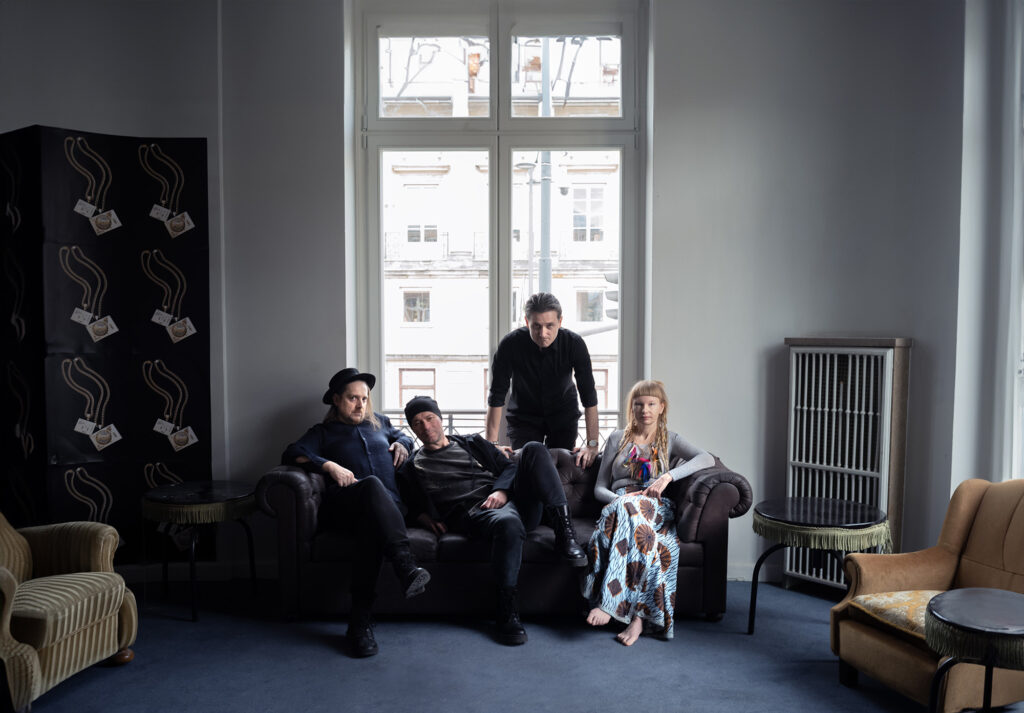
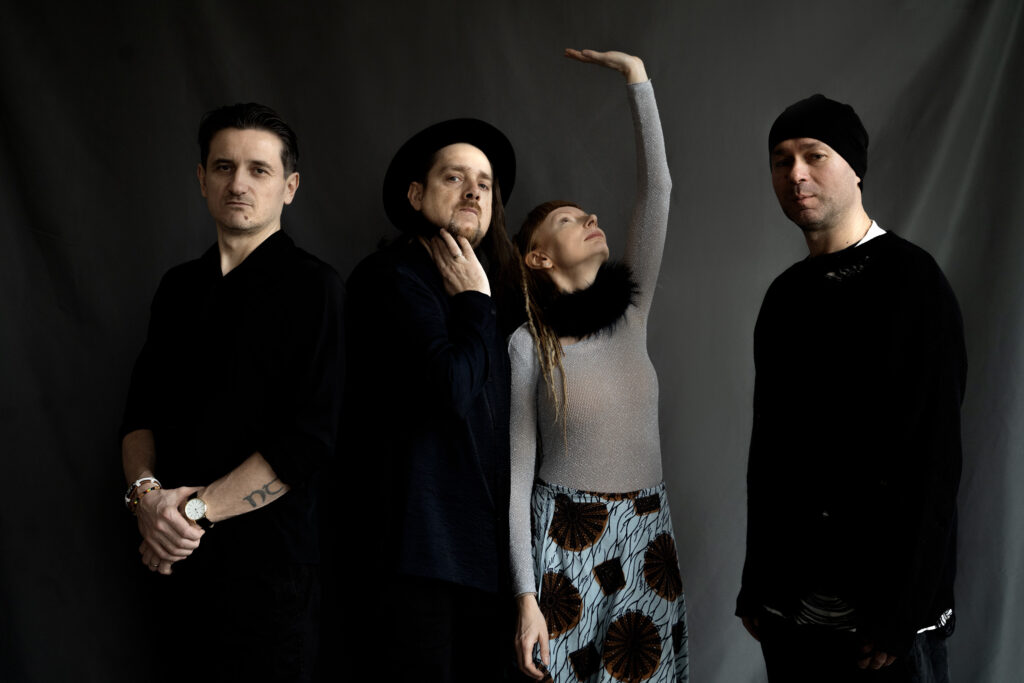
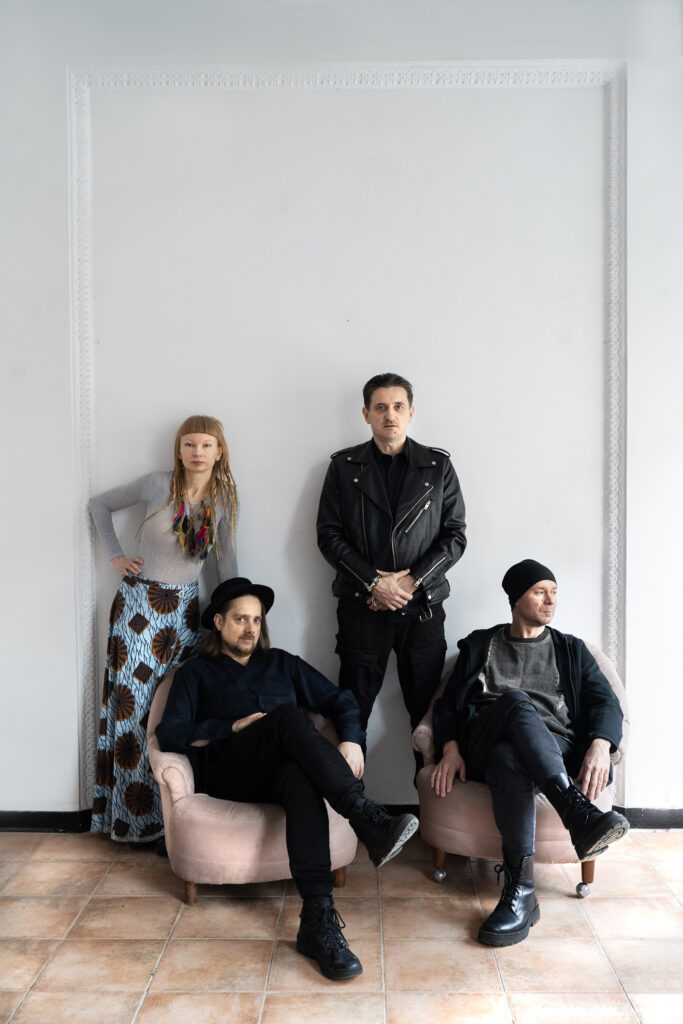
Polish band Amarok bring us their fifth album, crafted by Kornel Popławski (drums), Marta Wojtas (percussion, violin and vocals), Michał Wojtas (guitars, keyboards, bass and vocals) and Konrad Zieliński (bass and keyboards).
Within progressive rock, they’ve chosen to wear the “art-rock” label. Basically a less complex variant of the genre, though that doesn’t make it any less interesting — not at all. This record is a fine example, offering excellent-quality music built on calm, understated ideas.
A catchy riff supports a subtle keyboard melody, laying out the main motif. A spoken passage with a variation on the initial rhythm then lets the melody come back in, this time carried by vocals. More variations follow on the same theme, interspersed with that same spoken passage, until the guitar solo arrives. A repeat of the vocal section, paired with a countdown, closes out this opening track, titled “Hope Is”.
The vocal parts of “Stay Human” unfold over a guitar arpeggio. The addition of some percussion elements and a bassline set up the track’s first transformation, which is really just a rhythmic execution of the ideas already laid out. The second transformation is a minimalist passage with a Pink Floyd flavour, though adding an electronic element pulls it closer to Jean Michel Jarre territory. The return of the vocals steers the track towards its conclusion in a direct, efficient way.
The sound of a very David Gilmour-style guitar marks the start of “Insomnia”, a slow, fairly relaxed track. The rhythmic treatment feels rather dated, more fitting for early-nineties work, and that works against the energy the track could otherwise carry. So the result ends up fairly linear and not especially interesting for its first four and a half minutes. From that point on, things improve thanks to drums played with some real bite and authoritative bass and guitar lines; though they still choose to close things out with a fragment of voice and electric piano, just in case we get too carried away.
And speaking of dated concepts: “Trail” continues down that eighties-electronica path, which gives the composition plenty of consistency, but also a bit of a lack of character. That said, it’s a catchy track with pretty, agreeable melodies, making for a genuinely pleasant and entertaining listen. It gets more interesting still with the arrival of some powerful guitar turns that show off a heavier side of the band, in the vein of some Ozric Tentacles work.
By contrast, “Welcome” opens with an ambient first section, but soon settles into a backbeat that the melodies and beautifully crafted arrangements build on. The track then briefly does without its more rhythmic elements to offer a mood somewhere between epic and sorrowful, before continuing on towards a solid, fitting ending.
A fresh, fairly bare start presents itself in “Queen”, with a few piano turns offering jazzy touches, contrasting with extremely simple, filtered drums, using that always-lovely trick of loosening the snare wire. The repetition of ideas played out by the full band signals that these two moods will keep alternating. What’s more surprising is their choice of an electric violin solo, which carries quite a Jean-Luc Ponty flavour.
The instrumental “Perfect Run” opens with an unsettling atmosphere, but soon picks up a lively, upbeat rhythm that underpins a series of electronic passages and guitar chords you might find in some Frost* compositions. The track’s approach is to lean on these good ideas constantly, which ends up making it excessively long. In other words, it ends up giving us more bread than cheese — though, to be fair, the bread’s fresh out of the oven.
“Don’t Surrender” opens like a ballad, choosing a slightly halting rhythm that stops it developing like a typical slow track, though it later settles into a more familiar pattern for this kind of piece. It tries to steer away from the usual paths of a slow composition, but sometimes there’s no need to experiment and you can just play it more conventionally. The track gets a little rawer as it goes, and the solo brings to mind fairly Floydian territory, which keeps the track’s length from feeling excessive.
And continuing with this run of calm compositions, the sparse instrumentation of “Simple Pleasures” ends up perhaps too relaxing, and to some extent monotonous; and, well, half the track ends up feeling surplus to requirements.
The choice to close with a song in the band’s native language might have carried some significance, if it didn’t just continue in the same vein as the track before it. So these last two tracks end up feeling a bit of a mood-killer — it’s fine to keep things calm, but it’s easy to cross the line into boredom. Luckily, the light violin touches end up giving “Dolina” a bit of distinct character, making for a successful close.
In conclusion, we can say this is an excellent-quality album, one that isn’t at the cutting edge of production, nor does it need to be. And it has real beauty in the arrangements on offer. So it makes for a good listen on days when we need music that won’t disturb our zen moment.
Writer: David Sàez