
Progressive Rock

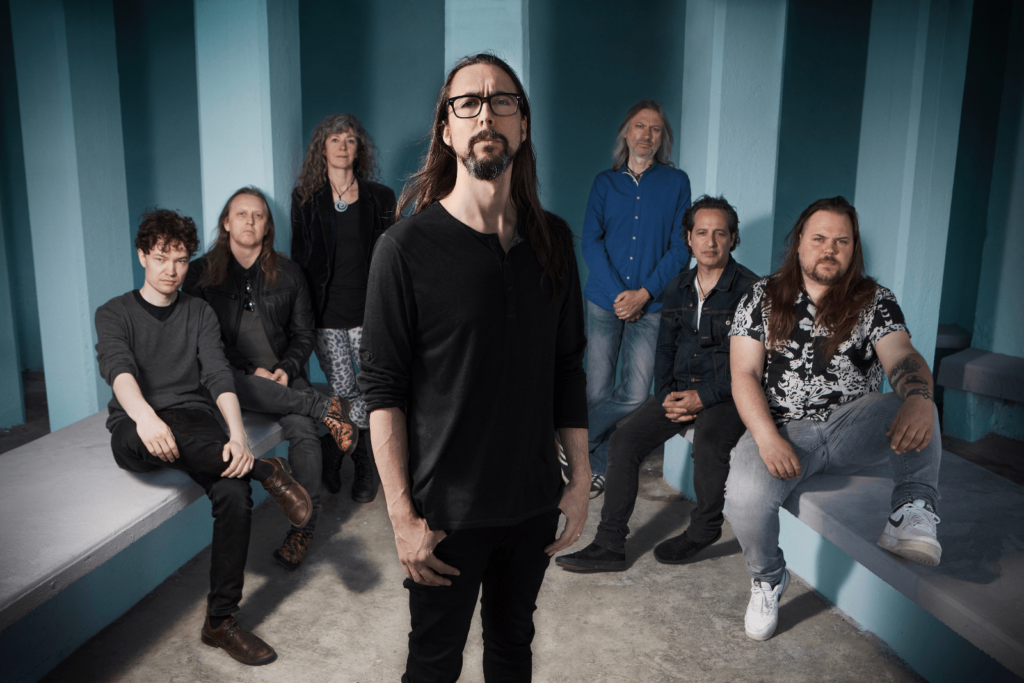
Big Big Train enter a new era, bringing in Alberto Bravin on vocals and Oskar Holldorff on keyboards and backing vocals. With them, the line-up is completed by Nick D’Virgilio (drums and vocals), Dave Foster (guitars), Clare Lindley (violin and vocals), Rikard Sjöblom (guitar, keyboards and vocals) and Gregory Spawton (bass).
Despite these changes — sadly including the loss of vocalist David Longdon, who passed away — there’s no revolution in their sound. Big Big Train fans can carry on enjoying exactly what the band has offered from the very start.
“Light Left in the Day” is presented in a very nostalgic way — after an acoustic-style introduction, the track kicks off as an instrumental ballad. The entry of a somewhat corny keyboard offering the same melodies but at a faster pace gives way to a repeat of the same motifs, now on guitar. And just when you think things aren’t going well, some keyboards come in emulating a rather cheesy fanfare, though they don’t last long, since the track disjointedly moves on to another idea, a kind of keyboard solo that, just as gratuitously, flows into fairly unsuccessful, pretentious and affected melodies. A weak start.
The introduction to “Oblivion” isn’t much of an improvement, showing the same musical taste as the previous track. Great songs have been made under this title before — but not this one. The sung sections have soft, fairly predictable melodies of little interest. Granted, it’s all beautifully produced, performed and executed — but is that a virtue if you’re bored? Because there’s no denying it’s a beautifully crafted album with magnificent musicians, but it’s only the second track and we’re already checking the clock.
The delicate opening passage of acoustic guitar, mellotron and violin on “Beneath the Masts” gives way to a brief piano-and-guitar duet, with a glockenspiel subtly joining in. It sets us up waiting for the voice to arrive. It really does seem to be trying to emulate those wonderful Genesis tracks like “Firth of Fifth”, and the intent becomes even clearer once the full band ensemble comes in. The difference between compositions is a matter of charisma — one track has it, the other doesn’t, because it lacks the strength and vitality, despite an extremely polished performance. Who knows, maybe that’s also working against it.
In any case, we’re not even halfway through the track and we’re still waiting for it to properly take off, as any good 17-minute prog song should. The run of flat, mid-tempo melodic lines is given a bit more dynamism around the ninth minute, ahead of an interlude with a somewhat theatrical flavour and keyboards that sound like car horns. The guitar solo, followed by a violin one, ushers in the more forceful section — though it’s excessively restrained and lacking any rock and roll. Somebody runs a red light, because the horns come blaring back before a mincing keyboard solo wraps up the track’s “heavy” section. We round the track off with over four minutes of a kind of mawkish, pseudo-epic ballad.
Even though it repeats the same formula for starting songs, we get a track with lovely vocal melodies and better-judged arrangements that give the composition a lighter feel. “Skates On” is still nothing more than a standard, relaxed, correct filler track on a lengthy record.
Well-harmonised backing vocals can’t hide the sameness of the lead voice, which sings “Miramare” with the exact same intent as anything else put in front of it, doing nothing to add any real dynamism. The band tries with an entry that’s as tidy as ever, but it never quite escapes the clichés it keeps falling into time and again. Very pretty, very neatly arranged, all of it — but that’s it; if you put it on to dust the house on a Saturday, it won’t bother you. The repeated formula of a supposedly forceful interlude, with keyboards of dubious taste, doesn’t do anything to make it stand out either.
And, honestly, it’s really not advisable to put this on for a nap or while driving — you could end up hurting yourself. “Love Is the Light” is a clear example of this. Aside from being hard to tell apart from the rest of the album’s compositions, it’s a formula the band repeats a great deal within their neo-prog. Another weak, dull mid-tempo number, wrapped in pretentious arrangements. All you want to do is hit stop and go watch documentaries on TV instead.
If you don’t want soup, here’s two bowls of it. “Bookmarks” once again offers us an introduction in that more acoustic style which, as mentioned, recalls the most classic Genesis. The problem is the formula is repetitive and too flat to sustain an entertaining full listen. Individually, each track probably works fine on a playlist, but sitting through the whole thing in one go ends up wearing you out. The second half of the track carries the same influence and picks up enough energy to remain pleasant enough through to the end of the running time, even if only superficially.
“Last Eleven” offers a cheerful tempo without straying from everything laid out in the previous paragraphs. Despite the recurring ideas, it is genuinely a track that grabs your attention, though by the 3-minute mark everything’s already been said, and what follows is a repeat of the structure with a keyboard solo and a slightly softer ending tacked on.
You can judge the results for yourselves if you give this calm, relaxed record a listen. Either way, don’t drive a truck carrying hazardous materials while listening to it.
Writer: David Sàez