
Jazz
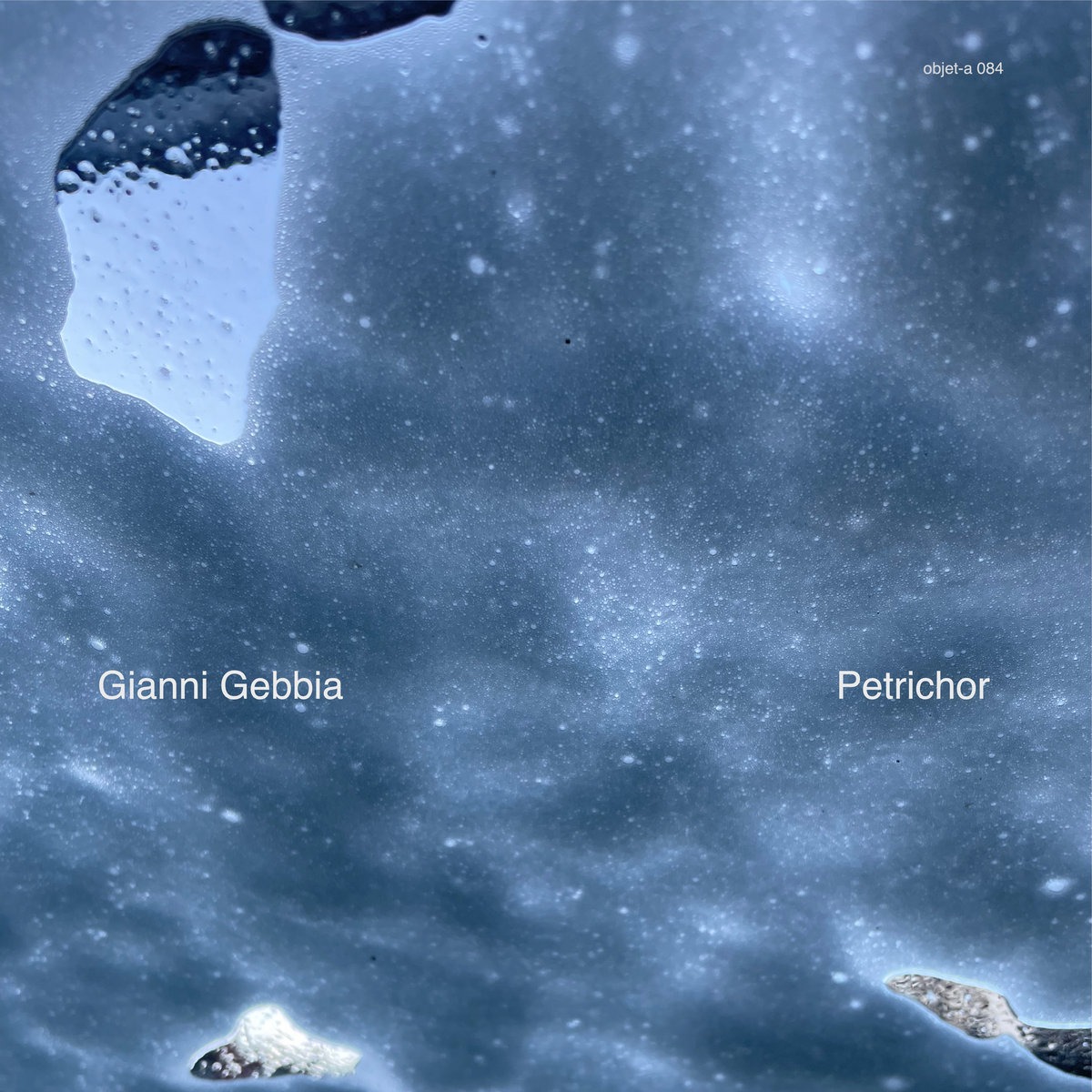
objet-a · 27 January 2026
None of the first twelve tracks runs over three minutes and the shortest does not reach a minute: twenty-three and a half minutes of miniatures before the record makes up its mind. “Petrichor” is made almost entirely of bansuri flutes and electronics, and Gianni Gebbia treats the flute as texture first and as a melodic instrument second: sustained notes that deform, air left sounding after the note, layers coming and going without the track ever declaring a theme. The soprano saxophone, the instrument Gebbia made his name on, appears on one track out of thirteen, number eleven. The title is a coinage the author explains in his own notes: from the Greek “pétra”, stone, and “ichṓr”, lymph, for the smell of rain on dry earth.
After those twelve miniatures comes “Zazeela”, which runs 10:48, almost a third of the record, and is dedicated to the memory of Marian Zazeela (1940-2024), light artist and member of the Theatre of Eternal Music alongside La Monte Young. It is the piece where this music has enough time to go where it wanted to go, and the credits title it a bonus track. Filing the one stretch where the record genuinely breathes as additional material is a decision that works against it: anyone who wants to hear what is behind these flutes has to go looking for track thirteen.
Gebbia made his name on soprano saxophone — Palermo, 1961; the New York of no wave from 1980; solo at the Total Music Meeting in Berlin in 1990 — and the bansuri did not reach him until much later, studying Indian music as an adult. That accounts for the approach: he plays it like someone who did not grow up with it and is not asking it for a melody. Of the thirteen tracks, the titles of the third and the ninth come from fragments of two Paul Celan poems, and the record was cut in the same January 2026 that it came out, on his own label.
Rating: 7.6/10
Text by Aina Torrents