
Progressive Rock

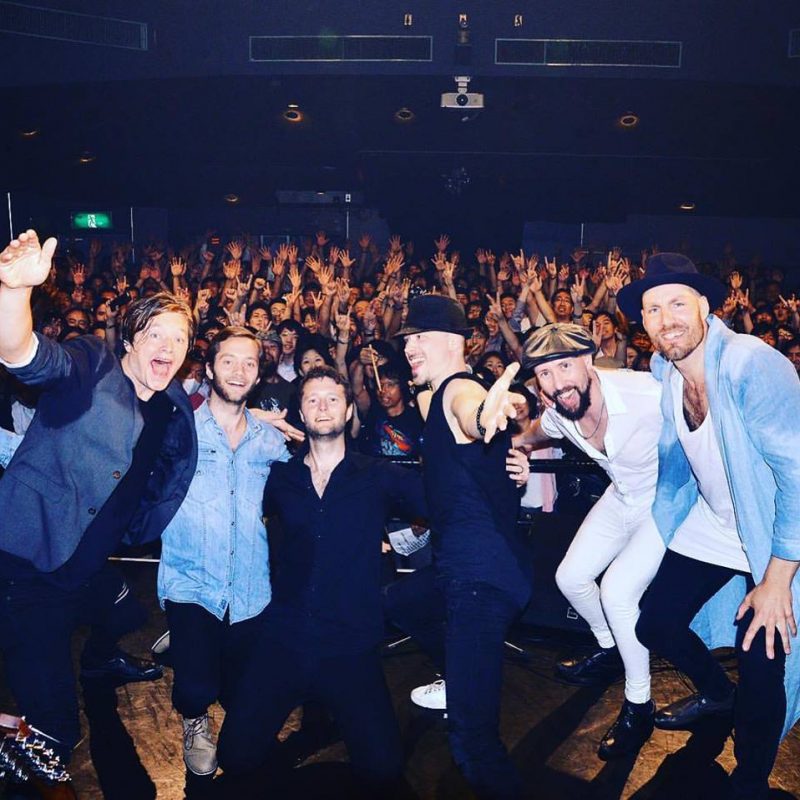
Sweden has always stood out as a breeding ground for death metal and black metal bands. But every Yin has its Yang, and this one is the sextet Moon Safari. They are currently made up of Sebastian Åkesson (keyboards, guitars and backing vocals), Simon Åkesson (lead vocals and keyboards), Pontus Åkesson (guitars and backing vocals), Mikael Israelsson (drums, percussion and backing vocals), Petter Sandström (lead vocals, acoustic guitar and harmonica) and Johan Westerlund (bass and backing vocals) — pretty much everyone sings here.
They released “Himlabacken Vol. 1” (2013), and then went into a long, decade-long hiatus. The typical mistake is that when you come back with that much accumulated material, you end up offering it all up at once. Honestly, tracks three through six could have been saved for another time, and we would be talking about a solid forty-eight-minute record. But instead there are twenty-one minutes that are a bit dreadful.
So “198X (Heaven Hill)” is quite the statement of intent — right from the track’s introduction and the development of its melodic motif, we are plunged straight back into bygone times. The sung section carries echoes of the Americans Styx, who always wrote catchy melodies. It is interesting how, in the bridge before the final chorus, they pull off a lovely tonal modulation.
The soft opening of “Between the Devil and Me” gives way to a more contemporary rhythmic figure that will accompany us several times, along with the guitar melody. Both act as connecting threads, combined in a very well-crafted way. Both verse and chorus have every hallmark of AOR music, bringing to mind eighties acts like Asia, Journey, Foreigner and company. The chorus backing vocals in particular get fairly saccharine. The interlude and the following verses, on the other hand, recall quite a bit of late-seventies Camel material. And, as befits a long piece, we get more intimate, sparsely instrumented sections, lending the track great dynamism, broken up by the aforementioned rhythmic figure that brings us back to the syrupy backing vocals. A fresh exploration of the instrumental ideas rounds off the track in more than interesting fashion.

On “Emma, Come On”, every notion of contemporaneity vanishes, since this track could not be more retro. The melodies are fairly saccharine, both in vocals and in guitars and keyboards, and they double down on these pretensions in the instrumental middle section. Luckily the track is short, its only justification being to make something catchy that might, or might not, work as a single.
In the shape of an intimate love ballad, we get “A Lifetime to Learn How to Love”, and with a title like that, following on from the production of the previous tracks, we are obviously reaching for our lighters to raise into the air. Whether to burn the physical copy of this record afterwards is left to the listener’s discretion. But the worst part is not that it is horrendous and pompous, but that it lasts eight minutes, in which it can give you a genuinely worrying sugar rush. A power ballad with no power.
“Beyond the Blue” is a transitional track built on excellent vocal work, with a wide vocal range, showing that this is precisely the band’s strong suit. And here they have shown considerably better taste than in some of the other backing vocals. Which is more than we would dare say about “Blood Moon”, which was fairly salvageable until someone had the bright idea that some toms worthy of the legendary 1981 Simmons SDSV would look nice. The attempt lands somewhere around the level of a “Movie Record” advert, and for those of you who are not middle-aged, we will leave the link so we can all have a laugh at what boomers, Gen X and millennials had to sit through. Even so, it is a pleasant track from another era, wrapped up with a solo and closing backing vocals that are, perhaps, a bit superfluous.
The main motif of “Teen Angel Meets the Apocalypse”, played on piano, keeps repeating with different instrumentation — some of it fairly curious — as it works through the first few minutes of this twenty-one-minute track. With the arrival of the second motif, simple but effective, the track softens to bring in the first vocal sections, within soft-rock parameters that Christopher Cross might have written. The interlude’s riff leads us into moods touching on prog ideas, especially as they drift toward minor keys, though they bring in some lyrical backing vocals trying to create a sinister atmosphere — except Sandström’s thin, reedy voice makes it hard to buy into that at all. Even so, what follows is fairly rich, musically speaking.

The track’s second half returns to moods flirting with pop, with a certain Electric Light Orchestra flavour, before later bringing back the main melody, over which a guitar solo is played. The following verses once again fall into excessive grandeur, though they aptly lead us into a very choral section and back into the earlier soft-rock ideas. They fall back into relative grandiloquence, ending with the keyboard playing “London Bridge Is Falling Down”. A good composition, coated in a layer of fondant icing.
The acoustic atmosphere and backing vocals that open “Forever, For You” give the song a precious, sugary feel, which by this point no longer surprises us. It is certainly not as cheesy as some other tracks, but it still shows the same approach. It is a smart move to bring in a saxophone for a lovely solo after the guitar’s. The extended closing section, despite having some notable moments, will certainly not appeal to listeners with heavier tastes, and will probably cause them some kind of apprehension. You should have read the review first.
And of course, how do you end an album like this? Well, with a track called “Epilog”. Emulating a church psalm, it closes out a record that will leave us with a hyperglycemia we will struggle to recover from.
In short, it is the ideal gift for any friend who is into brutal death metal, on April Fools’ Day. And if you are into candy-coated progressive AOR, go ahead and buy it — there is nothing wrong with being a softy.
Writer: David Sàez