
Post-rock

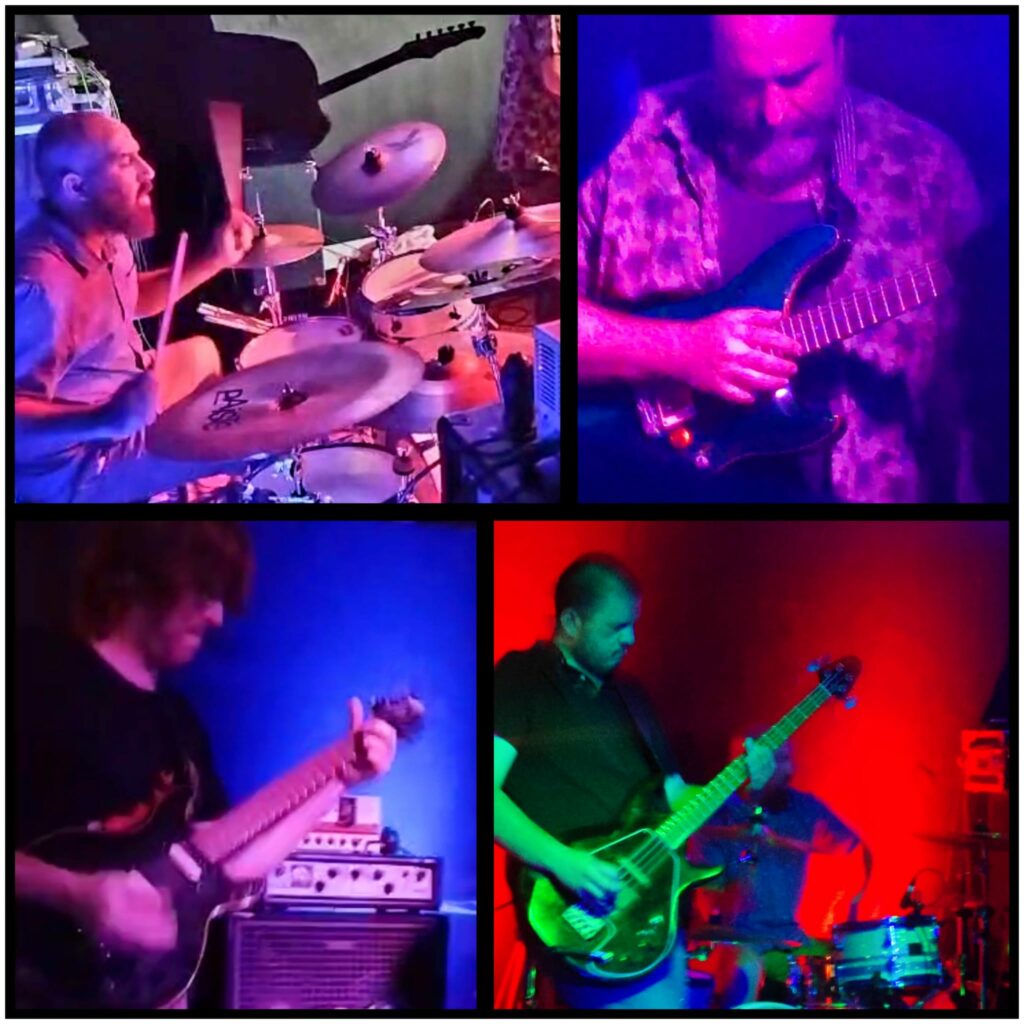
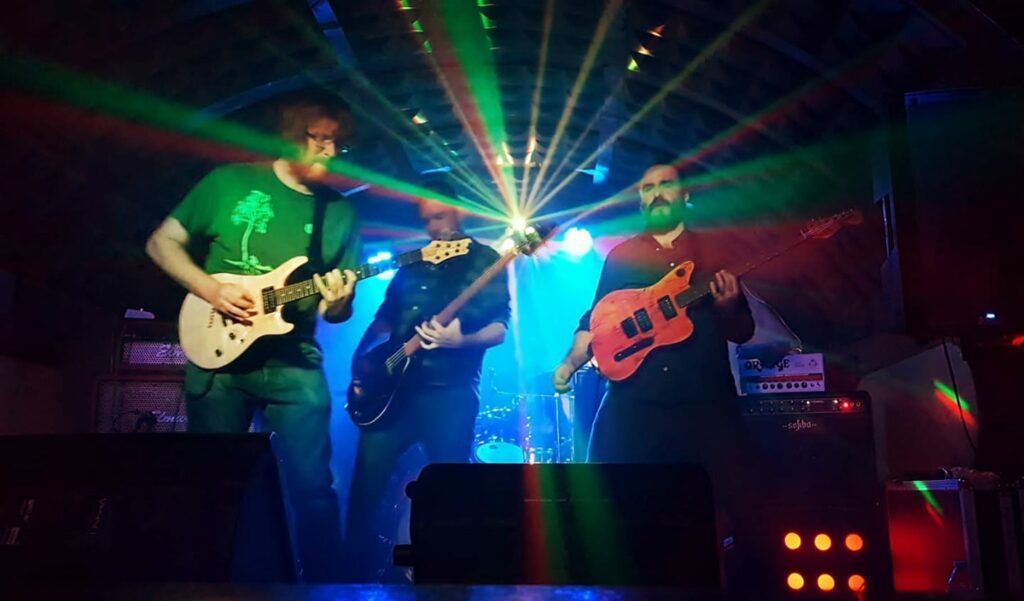
Second full-length album from the Madrid instrumental rock band Sekba. It’s encouraging to see how, after the hiatuses many groups took before the pandemic, they’re now starting to return to musical activity. Moisés Cáceres (drums), Ignacio López-Rufián (guitar), Javi Rojo (guitar) and Rodrigo Téllez (bass) are the authors of “Enjambre”.
You’ll find post-rock influences here, along with the occasional subtlety close to jazz-rock. A good assortment of rhythmic amalgams and, especially, a great deal of musical economy.
We dive into “El Avispero”, amid a buzzing drone that wraps around the guitar introduction. The main theme repeats with various variations of itself, backed by the rest of the band, forming this curious rhythmic amalgam, powerful and energetic. A second motif appears to lead into a bridge, linking back to the main idea, which they close out with a rhythmic variation.
Right after comes “Marabunta”, whose direct, no-nonsense introduction gives way to the guitar laying out the main riff. New guitar ideas keep piling on one after another, and you find yourself missing some melodic lines to round off so many harmonic and rhythmic shifts, beyond a handful of guitar notes recalling the ticking of a clock. The playing is clearly good, especially the force with which it’s performed, but there’s no melodic anchor for the listener.
Different is “En el Páramo”, where fairly identifiable guitar melodies are very well wrapped by the band’s arrangements. We could even say the melodic concept has a jazzy air, though filtered through the no-frills rock approach that’s the band’s signature. The arrival of the interlude, where the track slows down, signals a shift toward passages where several harmonic moods link together until the track ends, with some dynamics standing out for adding shifts in intensity.

The sound of a radio dial serves as the entry point, via a fade-in, for the full band, creating a first soundscape on “Fuego Fatuo”. This leads us into a new build-up of rhythmic phrases that simply act as a foundation for the guitar to play, with excellent technique, a kind of arpeggio through to the track’s abrupt end.
If you read the title “Watusi” and expect some African rhythm, you’d be wrong. In fact, it’s closer to Latin rhythmic ideas in what we might call its verses. And in what we might label its chorus, there’s no conventional melody at all. What follows is a run of riffs, with some variation on the main guitar line laid out at the start, and its charm lies in the occasional curious rhythmic amalgam it pulls off.
And more or less the same could be said of “Cencellada”, except for its fun introduction, since the rest is a fairly standard development. It’s very difficult to put together an entirely instrumental record without bringing in some other instrument offering a different sonority, or emulating some different sound with the guitars, since it ends up taking on too homogeneous an atmosphere for the listener. It would be good if they kept this in mind for future productions.

And an attempt to do exactly that is on “Camada”, where the bass, sitting further back in the mix but very present and important, provides the differentiation that was needed. And it does so authoritatively and forcefully, which lets the string of rhythmic figures and harmonies stay engaging, despite a fairly extended runtime.
The album closes with “Inercia”. A track that wraps things up with the same kind of ideas and concepts that dominate the rest of the record. You can tell there’s real work, craft and skill behind it. The interlude, where the drum-tom rhythm creates good dynamics, is quite lovely.
Fans of more rhythmic, slightly complex instrumental rock, and used to sparse melodies, have a good option here to discover a band and offer their support by buying something of theirs online.
Writer: David Sàez