
Progressive Rock
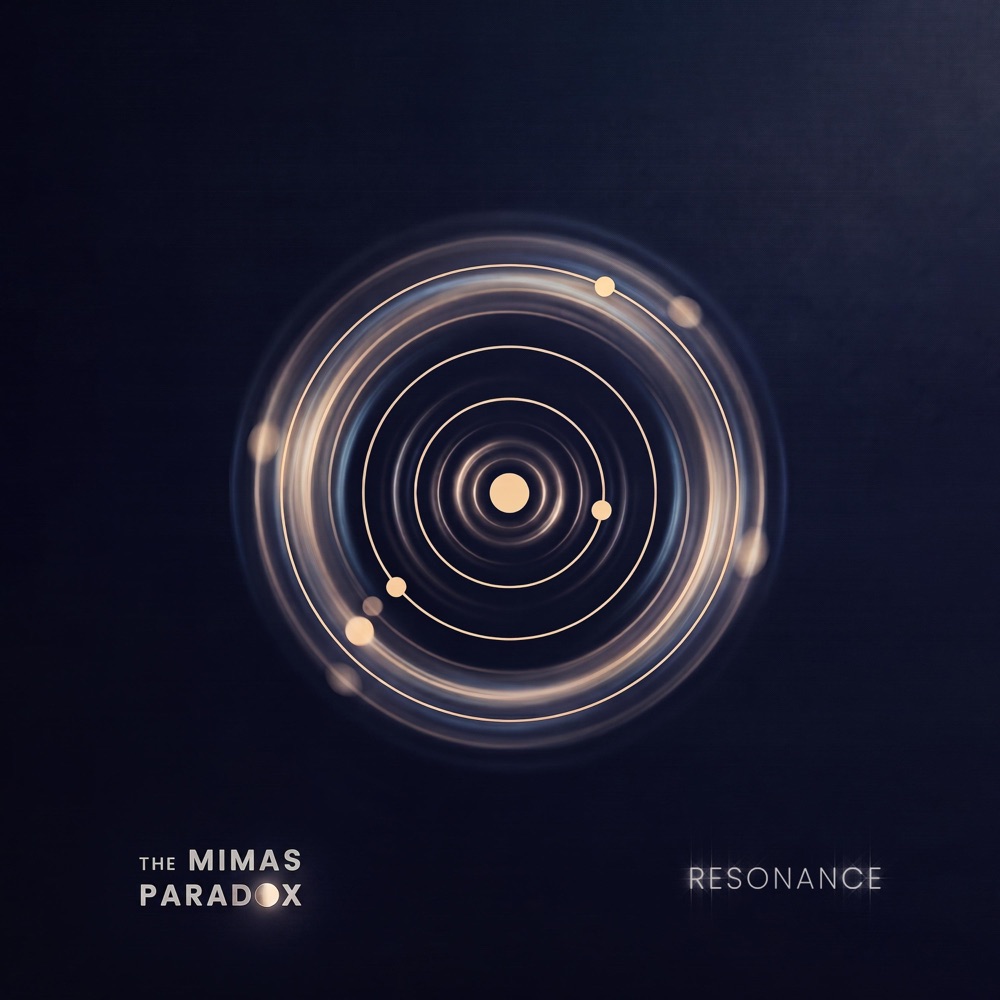
Self-released · 1 October 2026
The best track here is “Cosmic Solitude”, five zero two, and the reason turns up in the credits before it turns up in the listening: it’s the only one of the eight where Ferenc Izsépi plays bass. The piece builds on that warm bass, with guitars set well back and electronics that compete with nothing, and it’s the moment “Resonance” stops being a landscape and becomes a song. On the other seven tracks the low end comes from a synthesiser.
The Mimas Paradox are two men from Budapest, Daniel Kriffel (who comes out of Deposed King) and Izsépi, and they share out piano, synthesisers and electric and acoustic guitars; they program the drums between them. It’s a concept album, one traveller’s voyage across the solar system turning gradually inward, and it came out on 1 October on their own label, three months after the single “Floating”.
“Kuiper Belt”, eight twenty, is the long track and the one that earns the word “prog” on the label: it opens on a very dense electronic low end, reaches a crystalline climax of textures near the end, and comes out of it on an acoustic guitar, the only place on the record where you hear untreated wood. The other guest guitar, Gabor Budai’s, is here too and nowhere else.
Thirty-seven minutes with two two-and-a-half-minute pieces acting as doors (“Dawn”, two nineteen, and “Eventide”, two twenty-eight) leave six tracks of actual album, and five of those six land between three forty-two and five fifty-three. The duo always works the same way: a tapestry of synthesiser, a guitar singing over the top, a programmed snare keeping step. On “Cosmic Solitude” and “Kuiper Belt” that gets somewhere; on “Dark Matter”, four twenty-four, it stalls halfway and the record doesn’t notice. Programming the drums on an album that wants to sound like immensity is the decision that costs it most: the pulse is always exact and the space never fully breathes.
Rating: 7.0/10
Text by Guillem Cardós