
Progressive Rock

As the 20th century drew to a close, Bruce Soord made the first The Pineapple Thief album: “Abducting the Unicorn” (1999). Jon Sykes later joined as a permanent member on bass and backing vocals in 2002. Steve Kitch took over keyboards in 2005, and the band gained a decisive boost with the addition of Gavin Harrison on drums around 2017.
And it’s in this latest era that they’ve reached their highest levels of popularity, building a solid fanbase that, after years of hard graft, has earned them one of the best reputations within the broader progressive-rock family. So “It Leads to This” is an album that’s been eagerly awaited.
Soft opening piano chords wrap around Bruce Soord’s voice on this gentle, relaxed opener, “Put It Right”. The careful production and brilliant playing from every member let us enjoy top-tier musical refinement. As has been the case ever since he joined the band, Gavin Harrison’s supreme class lets you close your eyes and enjoy his great creativity in the tiniest masterful details, like the beauty of his ghost notes (a drummer thing), which show off this good man’s exquisite taste. Meanwhile, the finesse of the brief guitar solo keeps the track restrained until the arrival of the backing vocals, also always perfectly in sync, which gradually carry us toward the conclusion.
And there’s a change of register on “Rubicon”. A forceful introduction is followed by a verse in a precise 5/4 time, with a slight variation in a brief chorus that gives way to a very melodic refrain. The interlude continues with an ostinato in that same time signature, giving the drums a bit of room to shine before revisiting the chorus. To finish crossing the river (had to be said), they offer us a lovely coda that flows — predictably enough, right? — into another chorus and a final ostinato.
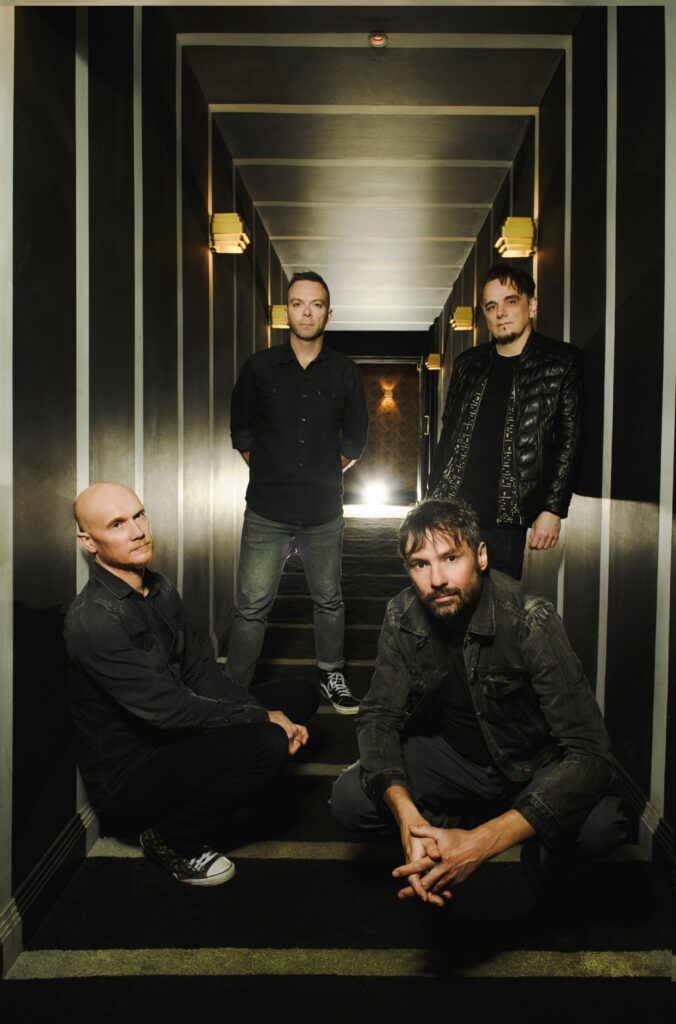

The title track, “It Leads to This”, opens with an atmosphere that’s fairly typical of the band’s repertoire, similar to older tracks like “Break It All” or “In Exile”, to name a couple of examples. It likewise takes us down paths contrasting power and delicacy, all delivered with extreme polish and beautiful melodies. Worth highlighting are Jon Sykes’s great bass lines — another band member with exceptional taste — and the lovely keyboard arrangements courtesy of Steve Kitch, who has the great merit of always doing the right thing from the second row.
The powerful riff of “The Frost”, the first single the band shared ahead of the album, is played across a run of alternating time signatures — 7/8, 4/4, 7/4. Perhaps The Pineapple Thief’s great virtue is precisely this: writing tracks that seem simple but hide an unusual complexity underneath. They’re the perfect band for newcomers to progressive rock, since there are some high-quality pop-leaning moments, this track being a good example. The most moving aspect is perhaps watching how they manage to keep a track reined in that could easily spiral out of control, giving us flawless execution on every level.
Bruce Soord’s more sophisticated side — and it’s rarely mentioned what a feat it is to be a musician with that surname — shows up on “All That’s Left”. A relaxed composition with fun, slightly eighties-flavoured keyboard sequences. And almost suddenly we get a furious contrast with a sharp little guitar solo, abruptly cut off to bring back the opening ideas with more direct arrangements. The conclusion, after the powerful riffs already laid out, returns to those playful sequences that bring to mind the ones Richard Barbieri used to play with Japan.
In ballad form we get “Now It’s Yours”, which at times feels quite intimate. Once again, the drumming shines monumentally, extremely creative especially in the calmer sections. And it shines both in tone and in precision. And, as on the previous track, it plays with contrasts of force and fluidity.
Time for an aside: whoever’s writing these paragraphs has to confess to being an amateur drummer, and consequently is thoroughly in awe of Mr Gavin Harrison. There are drummers who are powerful and can pin you to the wall, others who keep a great steady beat, some jugglers who leave your head spinning, and others with more hands than an octopus who play everything wonderfully well. Gavin Harrison would be the perfect connoisseur behind the kit, the kind who subtly uses his art to deliver the precise, surprising and spectacular touch. Basically, you just relax and let it happen, because it’ll take you to seventh heaven.
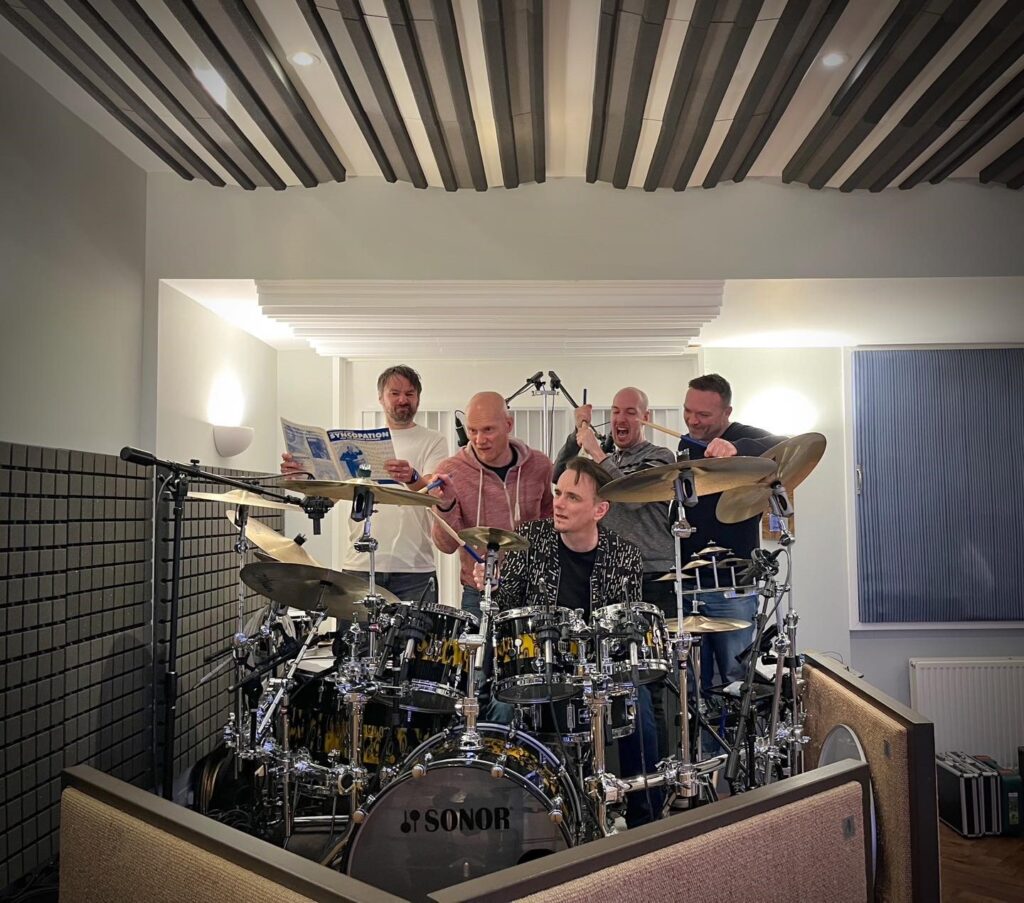
But setting aside this self-indulgent aside I’ve allowed myself, it’s worth noting that “Every Trace of Us” is the next track. This time, rather than contrasts, we get an interplay of shifts between loud and quiet that culminate in a magnificent, very proggy interlude, rounding off the song with the return of the chorus, which then cuts off sharply.
An acoustic guitar arpeggio, over which the vocal melody develops, opens “To Forget”. By this point we already know, since the band’s style is well established, that a much more agitated section will eventually surprise us; but until it arrives, we enjoy a technically attractive track. And, sure enough, the arrival of a riff with a small guitar solo over it isn’t all that surprising. Perhaps because, after 20 records of various sizes and concepts across 25 years, it’s clear there are firmly established foundations, and we don’t really expect any changes or novelties on that front.
And is that a bad thing? Not if you make an album as good and polished as this one. Compared to their recent work, you might like it more or less, but that’s down to personal taste. What’s beyond question is that seeing this band live is an experience you shouldn’t miss for the world. So, since they’ll soon be landing in our neck of the woods, we hope to get to drool over them for a while.
Writer: David Sàez