
Progressive Rock
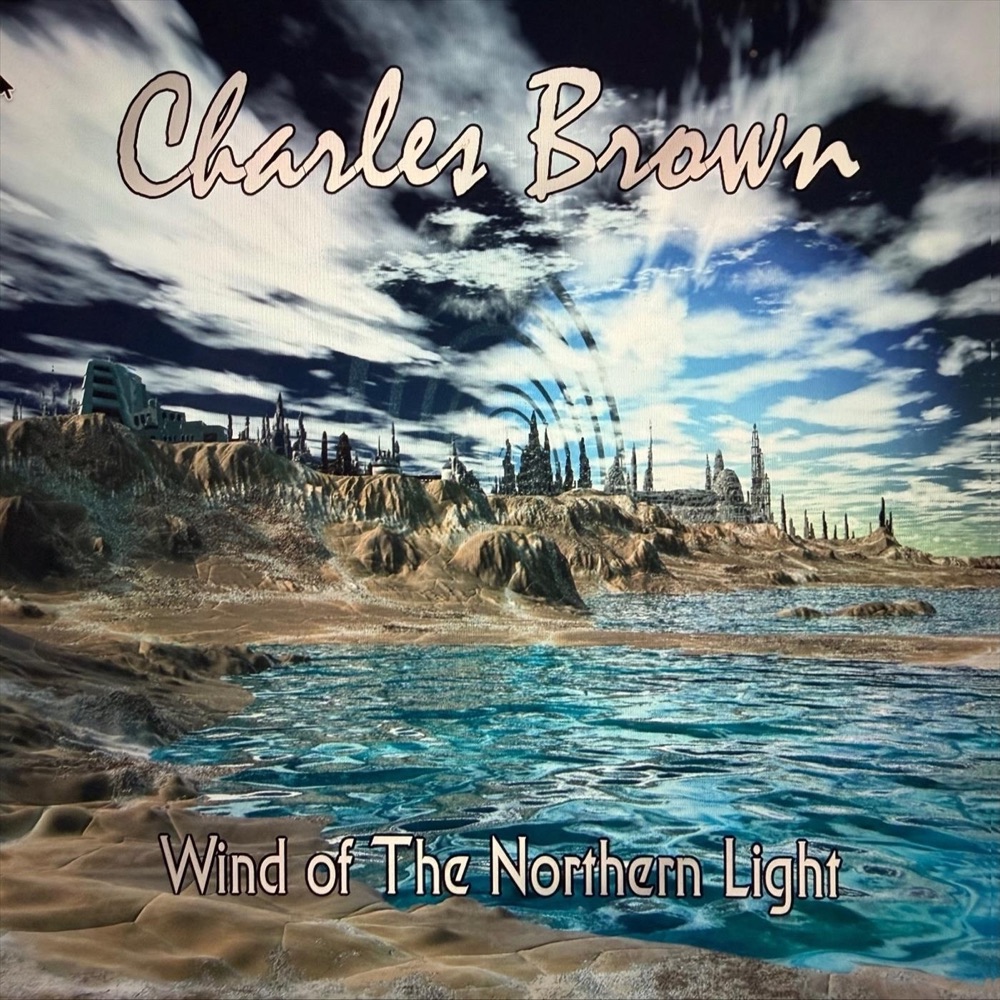
Self-released · May 2026
“Embers of an Ancient Age” passes ten minutes and is the only place on the record where Charles Brown lets a guitar phrase grow as far as it wants to. Greg Cummins, reviewing it for DPRP, hears the melodic side of Steve Hackett in it, and the comparison is honest in a narrow sense: there is no imitation, there is the same idea that a phrase can develop rather than resolve. On a record of eleven guitar instrumentals, that decision is what separates a programme from a recital.
Brown has spent more than forty years playing and teaching guitar in Denver, Colorado, and this album is his from top to bottom: his own page lists him as performer, teacher and sound and video engineer, which are precisely the three jobs it takes to get “Wind of the Northern Light” out with nobody behind you. The album came out in May 2026 on his own account and the only credit on it is his: guitars and a Roland GR30, the guitar synthesiser that explains why half the record sounds like something that is not exactly a guitar. He names Ritchie Blackmore, Pat Metheny, Pete Townshend and Alex Lifeson as his references, which is an uneven and fairly accurate list. His Bandcamp lists two earlier albums of his, “Explorer of Life” (2017) and “A New Awakening” (2023).
The record alternates temperatures with some care. The title track comes in broad and almost cinematic; “Ancient Highlands” heads straight for classic guitar rock; “Final Threshold” and “Fire & Fury” are the two heaviest, and the second, which comes straight after the long piece, is the one that invites you to turn it up. “Chase The Sun” changes the pace and puts the acoustic up front, and after “Ride or Die” comes “Ocean Horizon”, which holds that mood before “Fire of The Sun” and “Red Fire Burning” plug everything back in. It closes with “The Fading Sunlight”, two and a half minutes of acoustic guitar alone, which on a record that has had the synthesiser open the whole time is the bravest of the eleven decisions.
The record never says who keeps time, and it is not an administrative matter: there are drums here, there is bass and there is a band pulse, and the listing credits Brown on guitars and the GR30 and nobody else. The DPRP review, which describes the palette in detail, does not mention it either. If a machine plays it, say so; if somebody plays it, put the name down. On an instrumental album where the rhythm section carries much of the repertoire, not knowing who or what provides it is a gap the author could close in one line. What you do hear, though, is well made and holds up on a second pass: Brown plays well enough to show off and almost never does.
Rating: 7.5/10
Text by Guillem Cardós