
Jazz
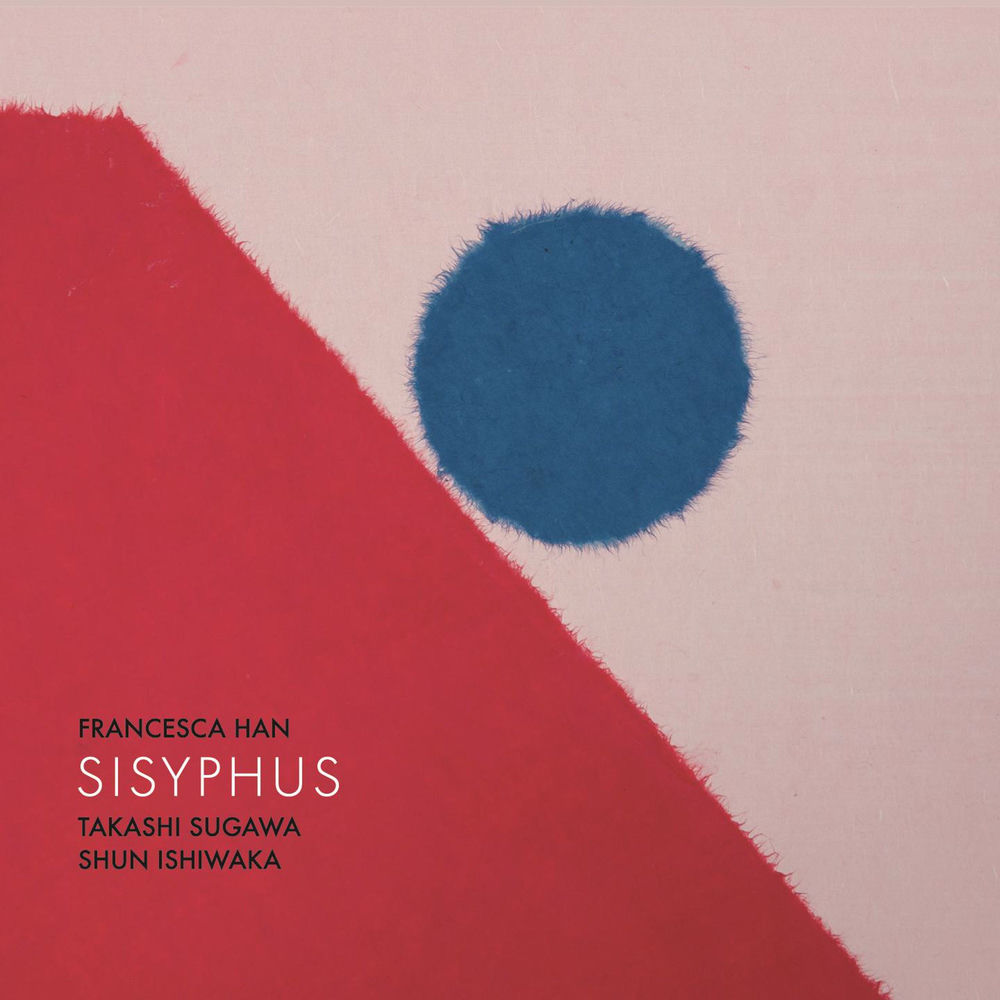
HANJI · 9 October 2026
“Chrysanthemum (For Kikuchi)” places its high point early and then withdraws for a long time. When the opening material comes back, at the end, it comes back weaker and never recovers its earlier height. For a piece dedicated to Masabumi Kikuchi, the pianist it is addressed to and who is no longer here, that shape is an argument: what we get back is recognisable and occupies a smaller place. Sue Yang, reviewing the album for All About Jazz, reads Camus into it and his idea that the interesting part of the myth is not pushing the rock up but the walk back down, and the correspondence is not merely rhetorical: several of the seven pieces reserve real space for what happens after the peak.
Francesca Han plays piano, Takashi Sugawa double bass and Shun Ishiwaka drums. Sugawa had met Kikuchi shortly after moving to New York and came under his influence, so the elegy that opens the record is not played only by the woman who wrote it: the bass underneath it belongs to someone who sat in front of the man. Han studied classical music and composition in South Korea and then spent eight years in New York, where her teachers included Jason Moran and Ralph Alessi. The trio road-tested this repertoire in clubs before going into Studio Dedé in Tokyo in March 2017, and the record does not appear until 9 October 2026, on HANJI. Nine years. Neither the review nor Michael Pronko’s liner notes say why it waited, and no source explains it.
The dedications are specific and each one asks for a different shape. “Cowelessi” joins Stanley Cowell and Alessi in a single title, and it works through a long opening passage that finds its double much later, once the central expansion has subsided. “Count Yourself” answers the “Countdown” that Coltrane recorded for “Giant Steps” in 1959; that original settles it in one short take at full speed, and Han takes it at a more measured pace, which leaves time to hear where each chord is going rather than merely passing through them. It is the only piece that saves its dynamic weight for the closing stretch, and on a record where almost all of them spend it earlier, that exception shows. The frame is domestic: it opens with “Petit Soleil”, written for her first son while she was expecting him, and closes with “Detour”.
“Sisyphus” and “Circle” sit one after the other and share the same dynamic outline (reach the highest point before the end, withdraw, then gather again), so the idea that organises the record turns up twice in a row and in its most literal form. Yang sees it and says so: a recurring design becomes predictable. There is an easy way to fix that, which is to separate them, and it was not done.
Rating: 7.9/10
Text by Aina Torrents