
MetalJazz
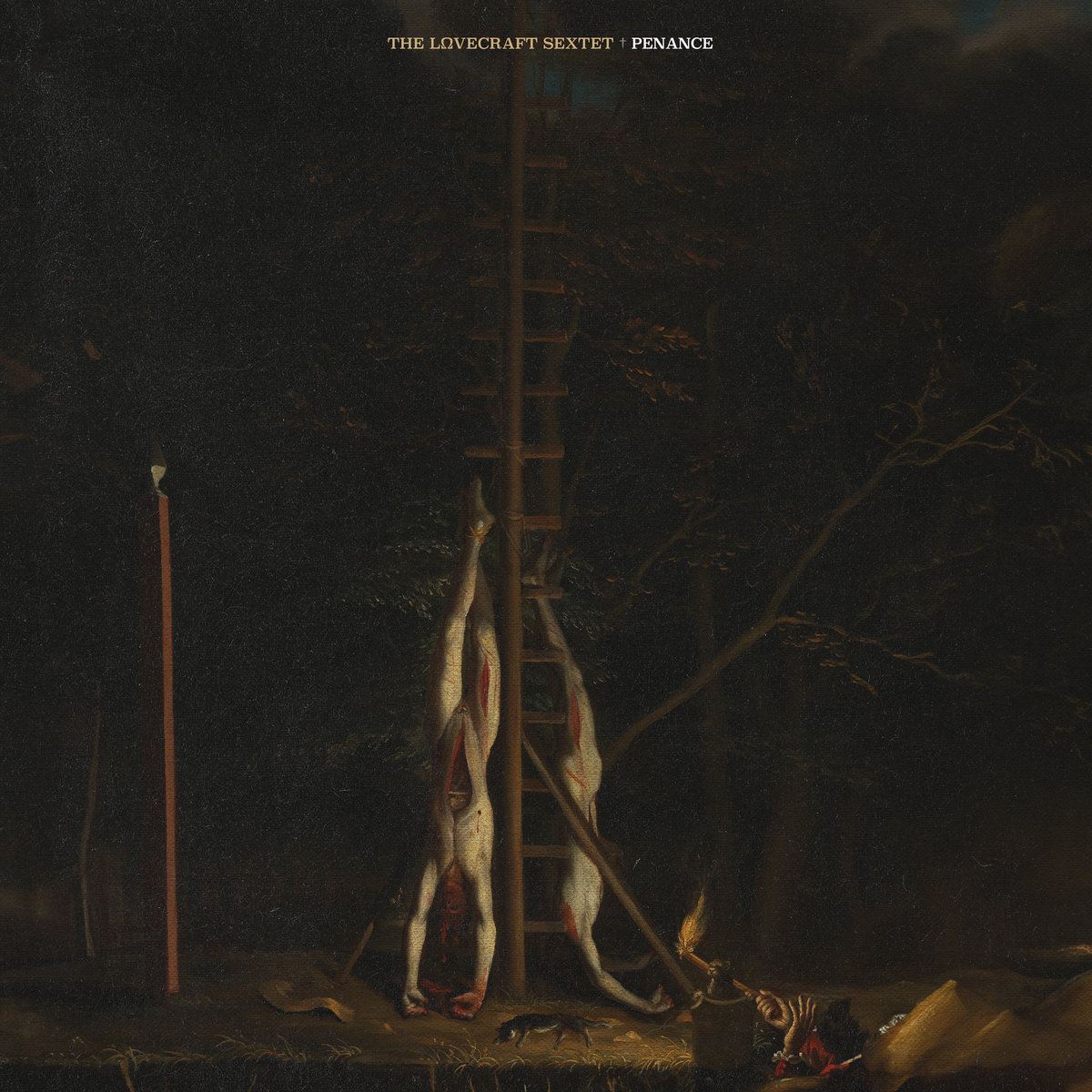
Debemur Morti Productions · 16 October 2026
“Si Quaeris” was the only advance track and it opens with a dry percussion hit over a bed of synth pads: four minutes and twelve seconds moving at the slow pace of all darkjazz, with harmonised saxophones on one side and Jason Köhnen’s growls on the other. The atmosphere is pure soundtrack, and the kinship with Badalamenti’s “Twin Peaks” work is so plain that the record takes it for granted and moves on to something else.
The Lovecraft Sextet is Köhnen and nobody else: he plays guitar, upright bass, drums, organ and electronics, supplies the voice and writes all the music. The two guests are Colin Webster on saxophone and soprano Lilian Tong. Köhnen comes from Bong-Ra, The Kilimanjaro Darkjazz Ensemble, Celestial Season and The Answer Lies In The Black Void, and this is the project’s first full-length since “The Horror Cosmic”, released on 27 October 2023.
The long piece is “Anima Christi”, twelve minutes and two seconds in which the percussion works against the beat, Webster’s saxophone shrieks above it and the growls sit buried in the mix, low enough to read as one more texture. It is the track where Tong does most of the work, and the contrast between aria and growl is what keeps the piece upright across those twelve minutes.
The second side spreads the registers out. “Requiem Aeternam” (4:35) is the most frankly jazz track here; “Confiteor” (2:44) is the shortest and the filthiest, with spoken vocals pushed through distortion over a block of atonal horns; and “Te Deum” (10:58) closes with the most open stretch and the only section on the record that allows itself to sound luminous.
The conceptual frame is the part that does not quite land. The album is titled “Penance (De lijken van de Gebroeders De Witt)” after the Jan de Baen painting hanging in the Rijksmuseum — Johan and Cornelis de Witt, lynched by a mob in The Hague on 20 August 1672, their bodies mutilated and strung up on the public gibbet — yet all six titles come from the Latin liturgy and none of them tells that story. The year 1672 is something you read in the booklet and never hear: this is a requiem mass with a footnote about a lynching.
Rating: 8.3/10
Text by Roger Estivill