
Jazz
Spartacus Records · 7 August 2026
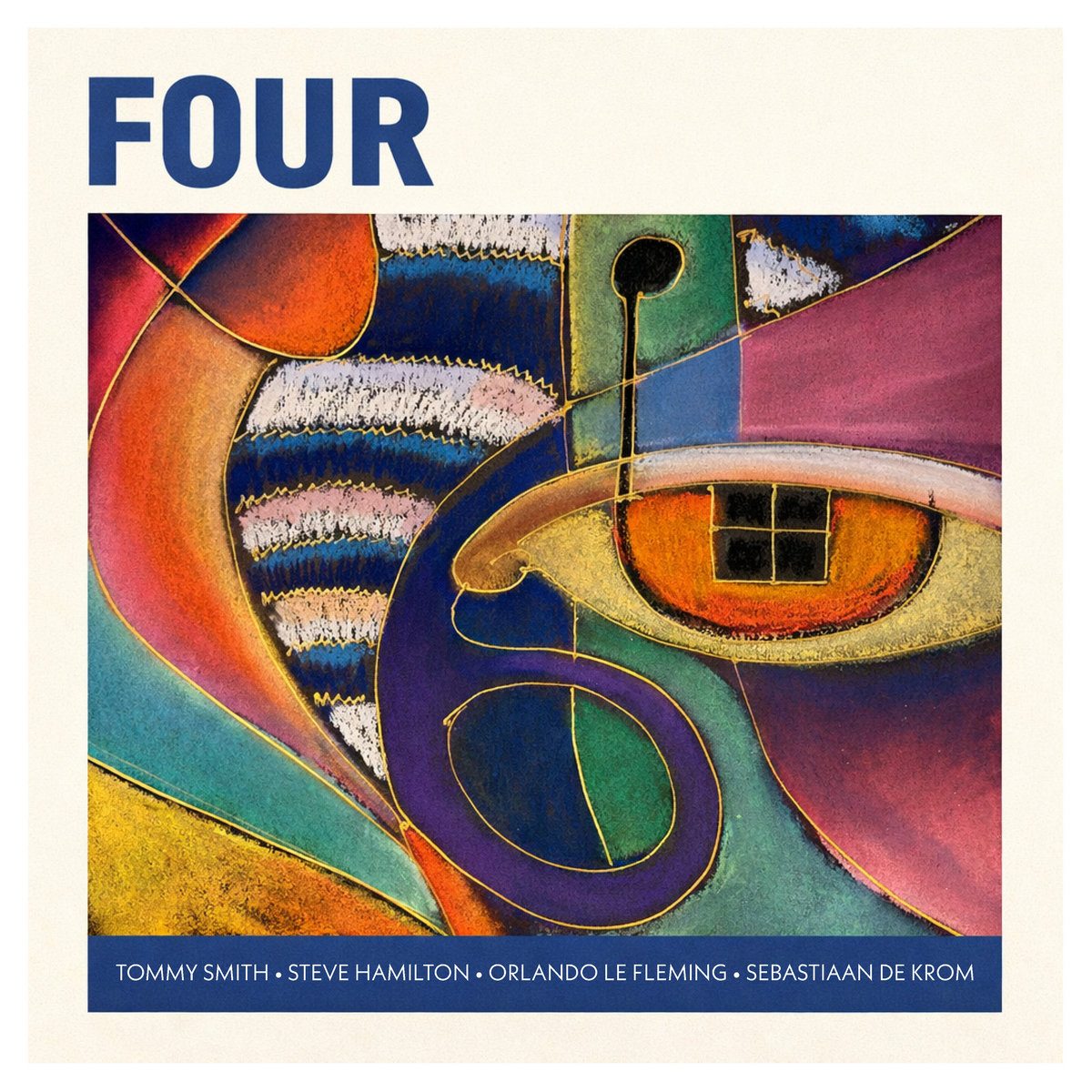
“Four” opens the record at fifteen minutes and three seconds, at a tempo that leaves no room for second thoughts, and that night there was no room for them either: what you hear is what went into a single stereo microphone placed in front of the quartet and recorded straight to MiniDisc, with no PA, no amplifiers, no mixing desk and no repair work afterwards. It is the first number of the second set Tommy Smith played at the Gateshead Arts Centre in 1999, exactly as it fell. Twenty-seven years on, he has put it out complete and in the order it happened.
The quartet that night wasn’t yet the one people would come to know. Steve Hamilton, from Aberdeen, was at the piano, at the time also Bill Bruford’s pianist in Earthworks; Orlando le Fleming was barely into his twenties and on double bass; and the drummer was Sebastiaan de Krom, who would later join Jamie Cullum’s band. The label releasing the tape didn’t exist either: Smith founded Spartacus Records in 2000, the year after this gig, so the tape has ended up on a label that did not exist the night it was made.
The repertoire is textbook tenor-quartet fare, and five of the six tracks run past nine minutes. “Four” is credited to Miles Davis — Eddie “Cleanhead” Vinson claimed it as his own — and Smith takes it with the same single-horn format Davis used in 1954, climbing into the upper register of the tenor with an ease that has you wondering whether he has switched to alto. “The Lady Is A Tramp” stretches to twelve thirty-five and “Someday My Prince Will Come” to nine twenty-four. The exception is “When I’m All Alone”, three minutes fifty-one, an original of his own, a ballad where he stays low with a vibrato that points straight at Ben Webster.
The single microphone costs you the stereo picture, and it costs you in the same place every time. Smith is out front because he was the one standing closest to it, while the piano and the double bass are spread around a room with little body and a deadened acoustic; on “Mil Dew / Cottontail”, eleven minutes forty-three, de Krom’s drums are working from a long way off to hold a tempo that wanted him in close. What does belong to 2026 is the way it has been put out: digital only, and Bandcamp only. There is no physical edition and no booklet: who was playing, what that night was and why it stayed in a drawer are all on the sales page.
Rating: 7.8/10
Text by Aina Torrents