
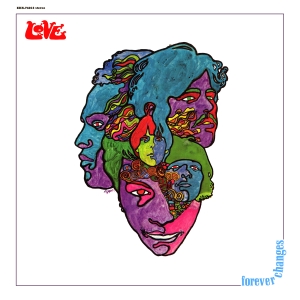
Sometimes time starts doing justice to albums that never got the recognition they deserved. Such is the case of “Forever Changes”, by the LA band Love. A child of an era when psychedelia and the hippie movement were riding high, yet it doesn’t hide the disillusionment and disenchantment with that counterculture felt by its main composer, Arthur Lee.
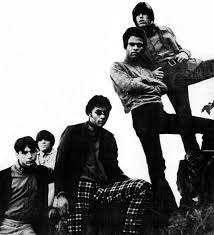
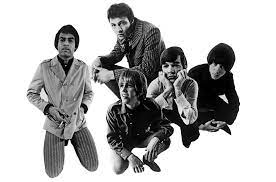
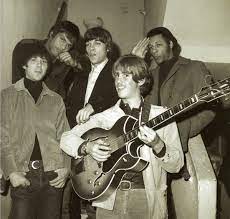
Alongside Lee himself on guitar and vocals, the album was put together by Johnny Echols on guitar, Ken Forssi on bass, Brian MacLean also on guitar and vocals, and Michael Stuart-Ware on drums and percussion.
Also on board was a whole string of session players, many of them the superb studio musicians of The Wrecking Crew, duly immortalised in the more-than-recommendable eponymous documentary “The Wrecking Crew!” (2008). For any music lover, watching this film is an absolute must — it features the finest “hidden” musicians in the history of rock: Hal Blaine, Carol Kaye, Don Randi, Billy Strange, and a long list of other quiet giants of the 20th century.
This album conceals plenty of subtlety and extreme elegance, owed in large part to the orchestral arrangements by David Angel, which surely rank among the finest rock orchestrations in history.
Tracks like “Old Man” or “Andmoreagain” are very folk-leaning songs, but with masterful orchestral arrangements that catapult these compositions to stratospheric levels — you’ll find them absolutely delightful, especially if you’re a fan of classic-era The Moody Blues.
The extraordinary production also deserves a mention, made even better by the 2015 remaster. It was far from common to get such crystal-clear definition on the instruments back in those years — the result of the mixes Arthur Lee himself worked on, and the crucial collaboration of Bruce Botnick, producer of Love’s first two albums and, later, of The Doors’ legendary “L.A. Woman”.
Masterful pieces like “You Set the Scene”, which serves as the closing track, sum up every one of the wonderful virtues you can enjoy in a calm listen to this gem. The refinement of its simplicity and the gentleness of the compositions always carry us to a place of positive, good-humoured feeling, on those days when we want to steer clear of anything harsh or strident.
It’s a record dominated by gentleness and refinement in seemingly simple compositions like “The Red Telephone”, though with cadences you can also find in bands like Cream, Buffalo Springfield, Grateful Dead, and so on. It doesn’t escape us that many of these ideas are the result of lysergic experimentation, which, if it was indeed present on this album, is kept perfectly under control.
There’s also room for a more American, border-flavoured sound, like “Alone Again Or”, which opens the record, or the enchanting “Maybe the People Would Be the Times or Between Clark and Hilldale”. And there’s space for more rock-oriented tracks, though still marked by the acoustic stamp running through the whole LP, such as “Bummer in the Summer” or “A House is Not a Motel” — that stone-cold line many of us have heard from our parents, and which many of us have ended up saying to our own children in turn. Let’s hope that, alongside that tradition, we can also pass this album down from generation to generation.
“The Wrecking Crew!” fact sheet and trailer
Writer: David Sàez