
Metal
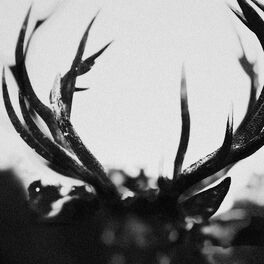
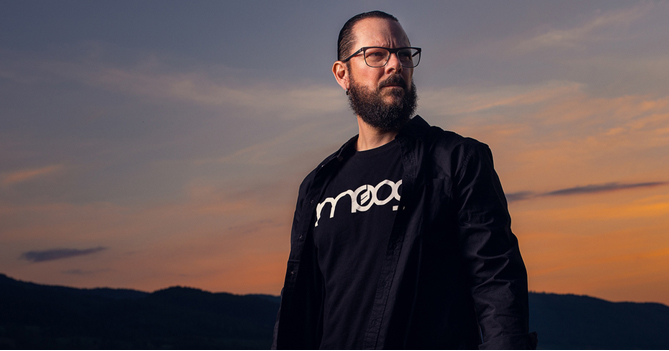
This review will be a bit different, since Norwegian composer Ihsahn offers us a complete eleven-track album, accompanied by its corresponding orchestral version. Essentially, what we find here isn’t a reinterpretation of the songs but rather a collection of praiseworthy arrangements. Especially once we notice they’re signed by Vegard Sverre Tveitan, which is Ihsahn’s real name, showing off his extensive and solid musical training.
It should be said that no orchestra is credited in the making of the album, so it can be deduced that it’s actually a virtual orchestra — at least as far as this editorial team has been able to find out, since we don’t have a press release from the artist either.
Long gone are his years in Emperor, a hugely important band in the black metal genre, though sadly remembered for the criminal activities of the other members of that group. If you’re curious, check out Wikipedia and, sooner or later, enjoy this magnificent record.
The first track on both versions is “Cervus Venator”. The main motif is played by a horn cutting through the strings, which subsequently take over the performance of it. A lovely introduction to whet the appetite.
With “The Promethean Spark” we get the first properly rock riff. From there we get verses sung in a raspy voice, with subtle orchestral arrangements more present in the choruses, where the voice also softens. Without straying from standard ideas, there’s a melodic bridge leading into an instrumental interlude. The closing section explores more ethereal passages within a relative darkness, from which the unfriendly voice pulls us back out again, accompanying us through to the final statement.
The orchestral version, meanwhile, opens intimately, offering us the main notes. Even so, we quickly recognise the complete line. Unfortunately, they chose to include percussion to keep up a certain rhythmic drive, which pulls this piece away from more classical concepts and ends up reminding us of a track from some film score. Aggression and power are lost in exchange for something more polished.
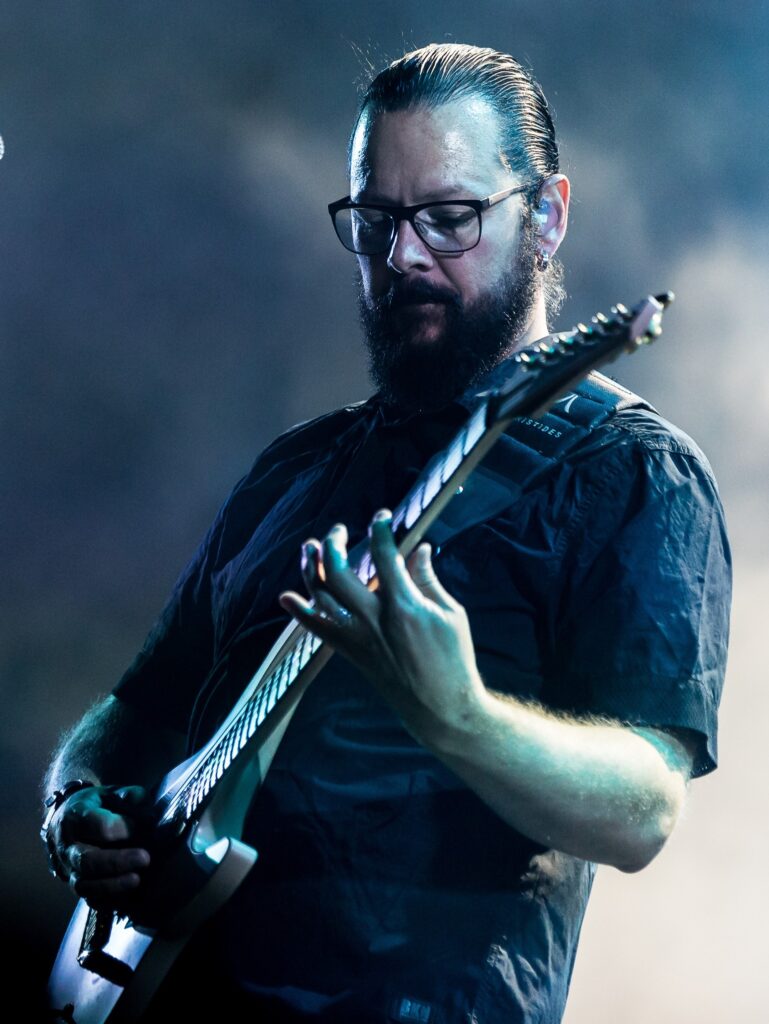
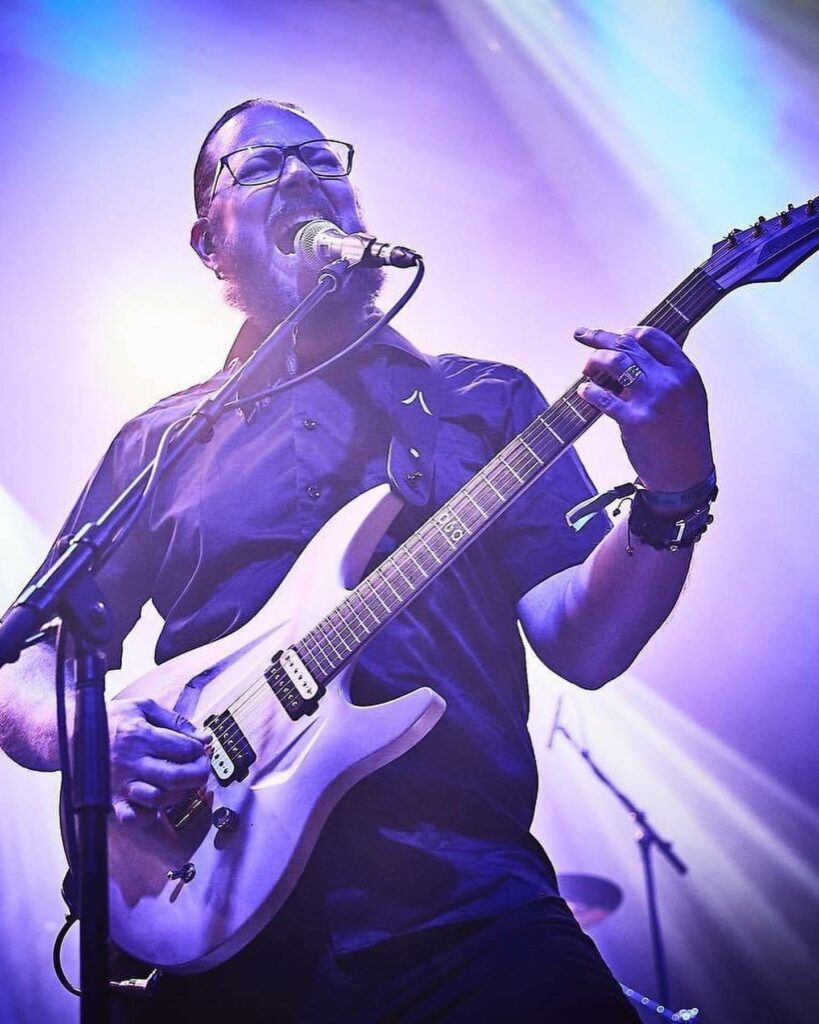
“Pilgrimage to Oblivion” is a fairly noisy piece that sets out to stun the listener with guttural-vocal arrangements and blast-beat drumming that end up blurring together amid so many layers, forming a nice distorted ball out of which the string arrangements poke through. Once they settle into more relaxed rhythms, we finally understand where things are headed and start to really grasp the track. The middle section, where guitars and strings play the same lines in unison, along with the more melodic vocal sections, is quite interesting. But overall you’re left with a certain sense of intoxication, and the feeling that your eardrums have been tastefully beaten up.
Obviously, the classical instruments offer greater subtlety, lacking the power of electric amplification. But it’s nice to see approaches closer to early-20th-century classical music, where we can find ideas closer to the style of Aaron Copland or Alberto Ginastera, but also the kind of scalar textures John Williams uses a lot.
“Twice Born” has an introduction that draws a little too directly on the orchestral approach. That said, we later get a relentless ostinato and a successful use of that introduction as a kind of chorus.
Naturally, the introduction sounds magnificent with the classical ensemble. Even so, there isn’t quite a clear enough line for it to stand as a deep, independent piece, possibly due to a lack of standout melodies, and we end up back in the familiar feeling of enjoying more of a film-score melody than something deeper.
“A Taste of Ambrosia” is a mid-tempo track with lovely guitar arrangements and a committed choice to sing the vocal melody using guttural technique. On one hand, it’s consistent with the artist’s style, which doesn’t bow to conventions; on the other hand, it doesn’t explore at all the more ornate possibilities on offer. It’s probably the right call, because otherwise we’d say he didn’t take any risks, and when someone does take a risk we criticise them anyway — so good for him for believing in himself, whether you end up liking it or not. Where there’ll be less debate is in agreeing that the extreme shift in atmosphere in the second half of the track is a good move.
The spotlight shifts between oboe, strings and winds in this version, fairly similar to previous approaches. In the more rhythmic section we find a mood very much in the style of Basil Poledouris, though with lighter instrumentation. The transition into the conclusion, bringing back the main line with strings arranged with real class, is especially lovely.
“Anima Extranae” gives centre stage to the piano’s tone and to conventional orchestral arrangements. Its development, accordingly, brings to mind the sound of Bernard Herrmann’s pieces. A gentle track that acts as a kind of resting space on the rock version, and as filler material on the classical version.
“Blood Trails to Love” once again explores the contrast between aggressive, almost unpleasant vocals and firm, gentle orchestral and guitar melodies. It also features a melodic sung chorus with, perhaps, an excess of strings trying to give it an epic feel. On the other hand, guitars and strings leaning into a kind of staccato do lend real strength and humanity to the verses following the chorus. And the track becomes truly magnificent when the two languages fuse, with orchestra and band locking into shared rhythmic hits while the guitar plays dissonant chord harmonies in the purest King Crimson style, before flowing into a transitional passage back to the verse, where the arrangements are delicious. Bringing back a final chorus certainly seemed inevitable, though the ending is genuinely curious.
Its classical version has great dynamism between sections, taking on a life of its own and avoiding feeling like a mere collection of arrangements. Even so, you miss the dissonances of the electric guitar, which gave the piece more character. That said, the conclusion is masterfully exquisite.
And with “Hubris and Blue Devils”, it seems the approach for the rock version comes straight from the orchestral one. We can practically bring good old Herrmann back up again, since the mind goes straight to that composer’s theme for “Psycho”. It’s worth paying attention to the low guitar and its arrangements. The arrival of the voice over the biting guitars is powerful and striking, lending a certain madness and fury that make the track a gripping listen. And the familiar contrast with a vocal chorus here further heightens the sense of facing a wonderfully neurotic track of great merit — further powered by a coda in triple metre and strings that carry it to a higher dimension. On top of that, they prepare a spectacular ending with an almost chaotic close.
Meanwhile, the orchestral-album version has the merit, right off the bat, of not being a crude copy of that famous “Psycho” theme, which was a very real risk here. Yes, the influence is there, but it’s a strong, positive one. The other smart move is leaning into the darkness rather than trying to offer more delicacy in the more melodic sections. That said, as a standalone track it doesn’t carry as much weight as other compositions, despite being an excellent exercise in orchestral arrangement — especially in the final section, which has a certain air of Igor Stravinsky’s “Petrushka”, using an almost childlike melody alongside extremely aggressive arrangements.
“The Distance Between Us” has a somewhat grandiloquent opening, efficiently reined in once the voice comes in. At times the strings are excessive, giving a pompousness to a track that has lines too incisive to be handled that way. In the end, we get a build-up of auditory information that’s too dense, and it’s a relief that the second half shows some restraint and opts for an abrupt ending.
On the orchestral version, however, these excesses aren’t really excesses, given the absence of the band and the vocals. Everything works in a more orderly, polished way. It’s true the main melodies also come out more diluted and soft, but given what was at stake, we come out of it pretty well.
“At the Heart of All Things Broken” is probably the most welcoming track to start the album with if you’re not used to complex music. Soft vocal and string melodies gently unfold a gentle theme in its first section, richly musical. The predominance of guitar arpeggios, driving the track, lets it flow with great dynamism. And with the arrival of the first guttural vocals, we get clear echoes of early Opeth, in their transition years toward a more classic progressive rock. The interlude, built on a relentless rhythm, grabs our attention before dropping down into more ethereal territory, from which we’re rescued by that creamy guitar arpeggio praised earlier, carrying us into the sung section, which grows increasingly epic as it progresses. And from that high point, we sink back into more delicate atmospheres. Honestly, all you want to do is listen to the whole piece again.
So, obviously, the orchestral version on its own comes across as quite watered-down. For the original track to reach its greatest heights of musical excellence, Vegard Sverre Tveitan’s consistent complementary work as a composer is essential. But more than on other tracks, here the listen feels more like a curiosity than anything else.
And we close with “Sonata Profana”. A brief orchestral composition, dark and with a somewhat morbid edge, acting as a dramatic close to the album.
This is a record that grows in musical interest as it goes, with great compositions especially in its second half. It therefore calls for attentive, careful listening, since there are many subtleties at play.
Writer: David Sàez