
Progressive Rock

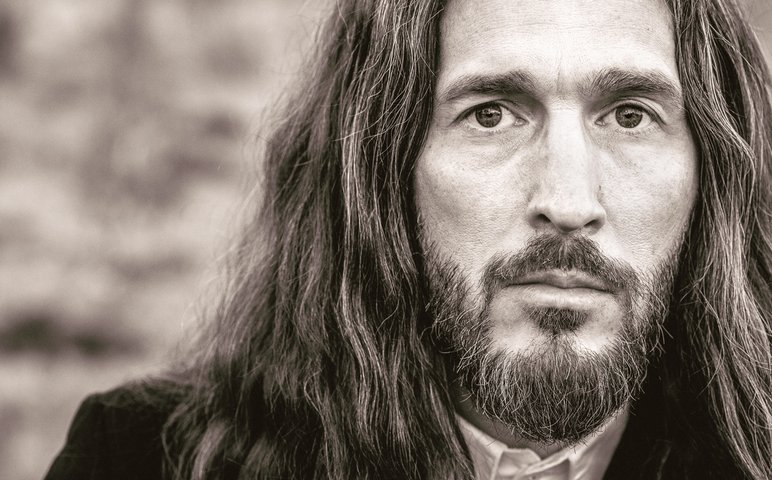
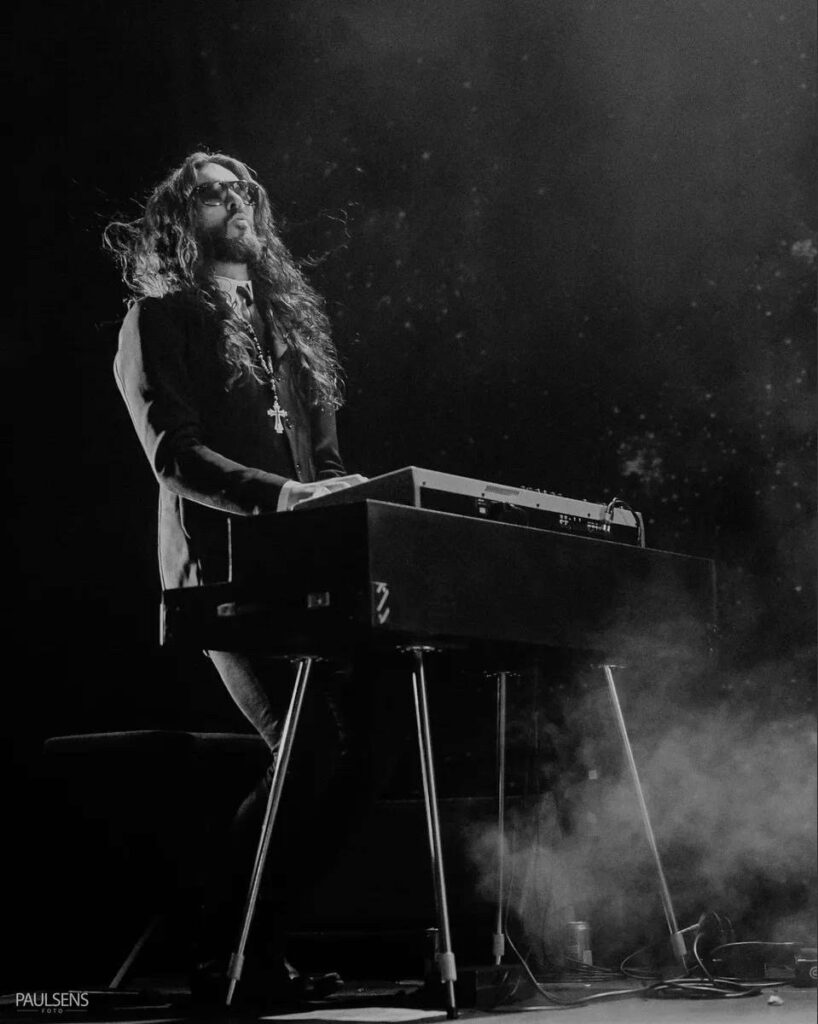
John Lönnmyr is a Swedish keyboardist offering us his second solo record. Thankfully, it’s very different from his first album, “Ristor” (2020), which was built entirely on a modular synth, and it showed. So let’s celebrate that he’s composed “Aftonland”, an instrumental work rooted in the most classic progressive rock. Needless to say, the keyboards take centre stage, but they know how to make room for other instruments too.
An insistent rhythmic foundation accompanies the main motif of “Ekipaget”, which develops on keyboard and then in unison with Thomas Rundström’s guitar, aiming for an atmospheric mood with a psychedelic touch that recalls the Pink Floyd of the “Obscured by Clouds” (1971) era, though with a considerably more contemporary production, naturally. As an opening track, it’s a solid proposal.
The shift in register on the title track “Aftonland” is considerable, especially through the first section’s melodies, which have a naïve quality. The interlude, on the other hand, is a thoroughly retro passage with very soft atmospheres, in the style of the early-seventies Canterbury scene, with a saxophone whose presence immediately brings Van der Graaf Generator to mind. Afterwards we get a coda built on the first section’s ideas. A pleasant, entertaining composition.
“Borck” is a shorter, more intimate track, justified mainly as a bit of variety for the record, though nothing would really be lost without it.
Next we find “Traktatet”, which recalls early Camel compositions, so as you might guess, we’re taking another trip back in time, and since nothing gives it a particular stamp of its own, it stays a vintage track with lovely flute playing that nostalgics will enjoy.
And watch out, because “Spjutet” carries a clear Opeth influence, on a day when they hadn’t woken up feeling particularly rocking. We can hear how the organ melodies and the following guitar arpeggios, with lovely flutes and mellotrons, make the connection between these two worlds crystal clear. That Swedish band has never hidden its roots, and neither has John Lönnmyr. A run of keyboard and guitar solos, from Elof Hanson Svensson this time, gives way to a rhythmic section where bassist Anders Brisman and drummer Mattias Jarlhed also get to shine. The abrupt ending is a wise decision to close out an excellent track.
Kristin Lidell’s trumpet leads a more intimate piece, “Vargtimmen”, sharing the spotlight with organ and keyboard in another instalment of this time-travelling journey. Beyond the curiosity of hearing a trumpet in this context, it’s not a track of great interest either, correct as it may be.
On “Gycklaren”, the bass is played by Lönnmyr himself, and its relentless riff is what authoritatively brings the track to life, progressively (it’s what prog does) introducing more instruments carrying different ideas that gradually and solidly build the piece up to a special kind of epic peak. Shame I don’t speak Swedish, since I can’t translate for you what the vocal, included around the midpoint of the track, is saying, right before the lovely guitar solo, once again from Elof Hanson Svensson.
And since we’ve talked so much about this being a record rooted in the seventies, closing it out with a piece called “Nostalghia” suits it perfectly. Here we get Maria Palmqvist’s voice delivering a kind of spoken passage, with backing vocals at the start and end. Even so, the weight still falls on the keyboards and the flute, as usual.
A lovely track that caps off an album that belongs to another era, one that will especially appeal to more veteran listeners, and to the younger crowd who don’t care about trends as long as things are well made. It’s well worth giving it a listen.
Writer: David Sàez