
Progressive RockMetalJazzAlternative

Writers:
David Sàez
Sergi Abadal
Josep Maria Llovera
Gabriel Martín
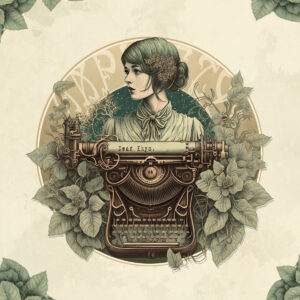
Akphaezya “Fell down the veil (Anthologies I, III & V)”
This Orléans quartet is back in the studio after a 12-year gap, probably capitalising on French progressive metal’s good health, or simply to complete the conceptual story they began with their Anthologies II and IV. Either way, welcome back. On this record they move away from the more experimental style they used to show, going for more standard, direct compositions, while keeping a certain darkness in their development and their personal stamp.

Uruguayan multi-instrumentalist José Pedro Beledo, though especially known for his guitar work, presents this album recorded in Catalonia alongside names like Carles Benavent, Jorge Pardo and Asaf Sirkis. A lovely exercise in fusing jazz with various styles such as flamenco, tango or rock. All done with great class and elegance, a real delight for the ears.

Blind Ego have released their fifth record, titled “The Hunting Party”. The project’s driving force is Kalle Wallner (RPWL’s guitarist). This record recaptures some of the essence of “Liquid” (2017). While it falls under neo-prog, it carries hard-rock elements that give it much more force than the parent band, and that’s despite Yogi Lang being involved — not on vocals, but on keyboards; vocals are handled by new singer Kevin Kearns, who has replaced Scott Balaban.
The standout tracks are the title track, the first single “In a Blink of an Eye” (a great solo), and the closer “When the Party’s Over”, which shows off with another trademark solo. If you enjoy melodies with a bit of energy, this could be a good starting point for discovering Blind Ego.

Blood Incantation “Absolute Elsewhere”
A bit of death metal shouldn’t hurt us, especially when it alternates with a dose of retro progressive rock, space electronica and ambient soundscapes that end up recalling Tangerine Dream or Pink Floyd, before they move on to handing out some blast beats and captivating guttural vocals. All in all, it’s a conceptual work of extremes that work brilliantly together, in an almost bipolar way at times. Highly recommended, and the alternation of styles makes it easy to digest.
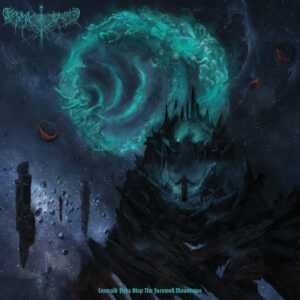
Cosmic Putrefaction “Emerald Fires Atop the Farewell Mountains”
A magnificent parody of doom progressive metal, courtesy of Gabriele Gramaglia. Starting with the project’s name, the pretentiousness of the title, blast beats galore, incomprehensible guttural vocals, oversaturated instrumentation. An excellent example of how music can be used for humour and comedy — because surely he didn’t mean this seriously, right?

A full review will be up soon at Tótum Revolútum Press.
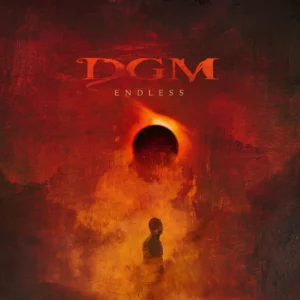
DGM is an Italian prog/power band with more than 25 years of history and a style close to Symphony X. This time, they’ve put out a record that’s openly more progressive, as they themselves have acknowledged. Without abandoning the prog-metal side, you’ll find flute, violin and acoustic passages, and very direct references to classic Spock’s Beard, Shadow Gallery, or more recent Opeth (minus the growls). A pleasant surprise.

Plenty to celebrate on these Englishmen’s fifth full-length record. First, the return of Craig Blundell (Steven Wilson, Steve Hackett, Fish) on drums. Second, the creation of an 85-minute concept album, what used to be called a “double LP” — which admittedly can wear you out, given the fairly long runtime devoted to one very specific style. And third, stylistically it’s closer to their debut album “Milliontown” (2006) than to their more recent ones, though it doesn’t disown those either, good proof being that the opening track, “Skywaving”, begins with the ending of the last song from their previous record, “Day and Age” (2021).
A greater presence of solo sections pulls them slightly away from the classic Peter Gabriel reference points, steering them more toward the equally British paths of neo-prog, with sonorities closer to IQ or Marillion. And it’s worth highlighting, once again, Jem Godfrey’s supremely elegant production, achieving extraordinary polish while avoiding any of the cheesiness this branch of progressive rock tends to fall into. In short, once again, an excellent, almost mandatory listen.

Hans-Jürgen Fuchs’s project changes lead vocalist with the arrival of Max Paul. The two of them, as the project’s public faces, have led a more than notable record with reference points from various eras — Steven Wilson, Genesis, Riverside, Van der Graaf Generator, to name a few. With simple but very well-crafted production, this is a really interesting album that deserves a listen.
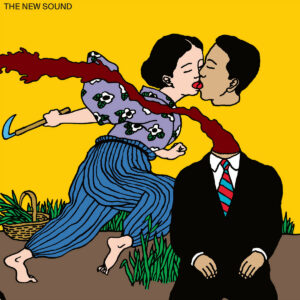
While Black Midi’s hiatus continues, we get to hear their frontman’s solo work. We could probably describe it as a friendlier version of that band, with some Latin-jazz influences that, being a solo record, he writes simply because he feels like it, even when they don’t quite work. There are plenty of clichés here, and probably because of the voice’s very spoken-word delivery, it ends up feeling a bit tedious to listen to in one sitting, since it doesn’t bring anything new or notable.
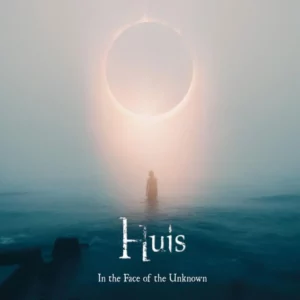
If I were a neo-prog band, I’d be careful not to release my record the same week as Frost*, since any comparison would be odious. That’s partly what happens to these Canadians, since at any other time we’d say this is good, but now it stays at a mere “not bad”. The production is simple and the compositions could be more dynamic. Being from maple-leaf country, the best reference point we could offer would be Mystery, and that’s the direction they’re sailing in.

Joe Deninzon & Stratospheerius “Impostor!”
After years of slowly cooking up this album’s production, violinist Joe Deninzon and his band present us with this record, where we find influences from Styx, Spock’s Beard or Pattern-Seeking Animals. It occasionally sins on the side of excessive virtuosic muscle-flexing on violin, but let’s not forget that’s the main instrument here.

Lee Abraham “Origin of the Storm”
After a couple of years dedicated to Galahad’s work, guitarist Lee Abraham has released a new production called “Origin of the Storm”. His melodic style falls within neo-prog, with AOR touches. With cover art by Andy Tillison and production by Karl Groom, the record feels, in part, like a continuation of “Only Human” (2021), while also reconnecting with the energetic solos of “Comatose” (2019). It features illustrious collaborators like Clive Nolan (Pendragon, Arena) or Rob Arnold. Vocals are once again handled by Peter Jones (Camel) and Marc Atkinson (whose melancholic voice suits him perfectly).
Several pieces are semi-epic mid-tempo tracks, like “The Same Life” and “When I Need a Friend”. Other standout pieces are the instrumental title track “Origin of the Storm”, “Isolation/Disconnection” and “Siren’s Song”. Worth giving a listen if you’re drawn to guitar solos without any harshness.
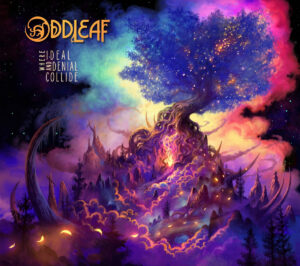
Oddleaf “Where Ideal and Denial Collide”
A more than correct debut from these Frenchmen, who, despite offering an excessively classic proposal, do show a will to avoid getting too stuck in the past — something they haven’t fully managed, though. With a symphonic-rock sound carrying a flavour of Reinassance or The Flower Kings, it makes for a very gentle listen.
These guys were already over the top when they started, and with every new record they twist the concept two notches further. This new record, we could say, covers every label decent folks wrinkle their nose at just from hearing one of them: black metal, psychedelic prog, industrial noise electronic… it might come close to the delirious proposal of these Dutchmen. They’re capable of making a classical piano sound utterly deranged. If you want to hear the soundtrack that’ll accompany your descent into the depths of hell, once Dante turns back and Virgil slits his wrists, this should give you an idea.
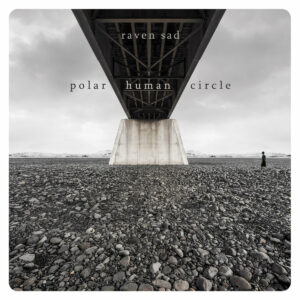
Raven Sad “Power Human Circle”
The Italian project led by Samuel Santanna has a new instalment, exploring neo-prog paths and developing ideas that could easily belong to bands like Camel, Marillion or IQ. Fans of this style will get a pleasant listen, though probably not a memorable one.
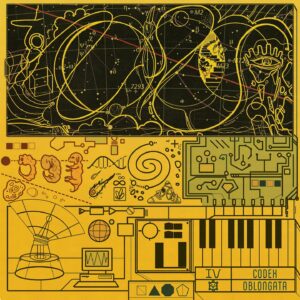
Guitarist and composer Jorge Andrés Ferreras brings us, from San Juan, Puerto Rico, this fairly complex record blending various jazz strands: acid jazz, jazz-rock, Latin jazz, a bit of avant-garde, and so on. All presented without holding back, in a surprising, fun way. Without being an experimental brick, you do need to be very open-minded and unafraid of adventure, because your head might explode if you’re expecting anything resembling a standard.

Sungazer “Against the Fall of Night”
With fairly classic ideas within softer nu-jazz and funk, but with quite contemporary production, the duo made up of Adam Neely and Shawn Crowder have put together an album with sonorities recalling Stanley Clarke or The Headhunters, but also Tauk or Snarky Puppy, while also carrying some EDM elements. In short, a very friendly fusion record, with simple melodies and highly accessible to any listener. Probably a jazz album for people who don’t like jazz.
Tony Patterson Doug Melbourne
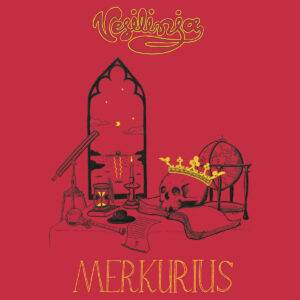
A very retro, or thoroughly dated, record, whichever you prefer. Even so, if you love early-seventies progressive rock, you’ll genuinely enjoy this. You can transport yourself back to the era when Focus or Caravan were killing it, and on top of that you can try learning Finnish. What more do you want? Oh, a spectacular album too? You really do want it all.
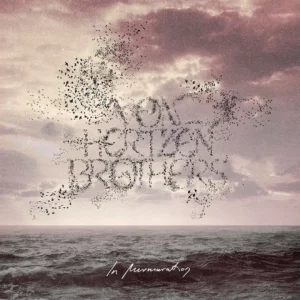
Von Hertzen Brothers “In Murmuration”
The three Finnish brothers are back in action, but setting aside their proggier side to offer us something closer to solid pop — the kind plenty of bands in the style would love to pull off. Fresh and upbeat, sure, but at the same time a bit inconsequential, soft, cheesy, and far from the power of their earlier work. It was probably a career turn in search of new forms of expression, new audiences, or simply something they felt like doing. Either way, let’s hope it stays an anecdote in their trajectory.
Writers: David Sàez, Sergi Abadal, Josep Maria Llovera, Gabriel Martín