
Metal
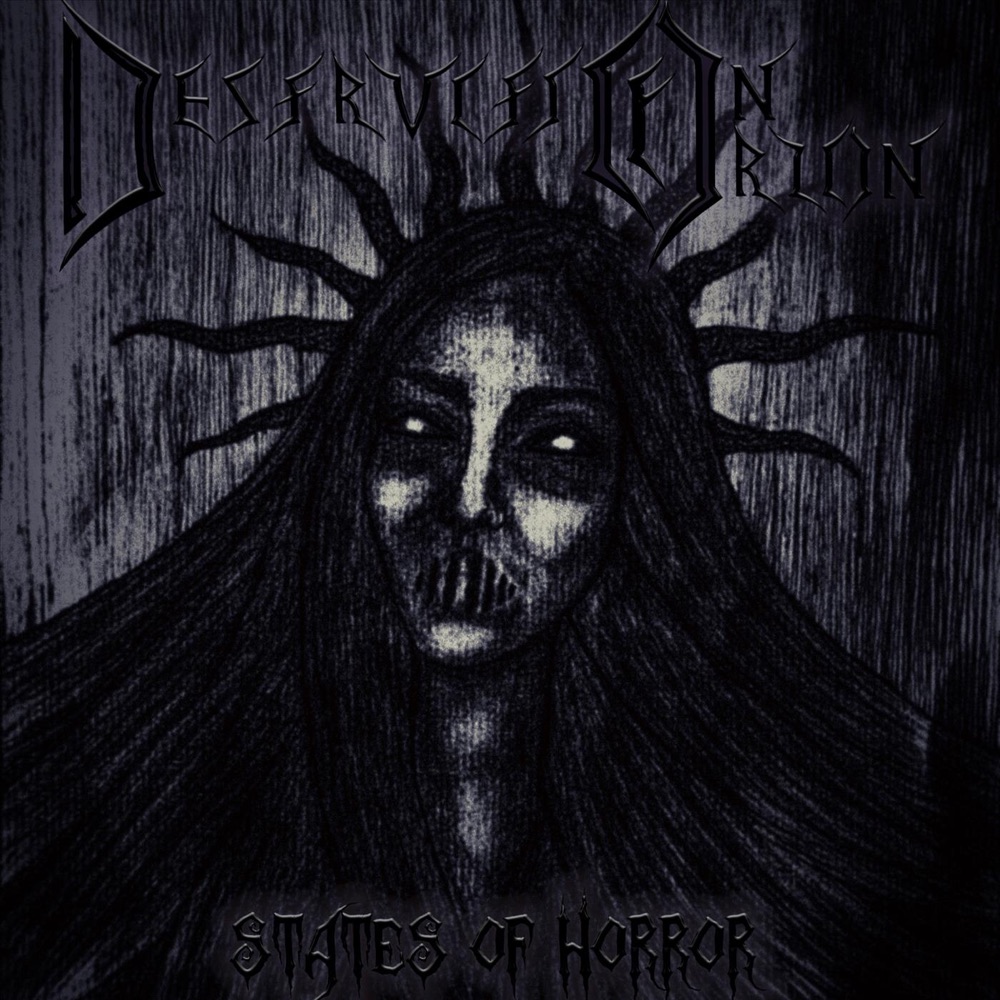
Aesthetic Death · 30 September 2026 (physical edition)
The six tracks at the centre of this album are called “Avolition”, “Catalepsy”, “Lethargy”, “Deviance”, “Melancholy” and “Anhedonia”. Five of those six are clinical terms for psychic flattening: the absence of will, the inability to move, the loss of pleasure. The record is a nomenclature, and each piece spends between 7:20 and 10:46 working through one entry in it.
Destruction Of Orion is Tehina Spasova alone, from Sofia, a project she started in 2023 and which had already produced Decreasing Brightness in 2024. States Of Horror appeared in May 2025 as a digital-only release, and Aesthetic Death is now putting it out as a digibook dated 30 September, part of an operation that also takes in a reissue of the debut. Spasova says she doesn’t write before recording: she composes each track during the session, and the album’s concept turned up once a few of them were finished.
The voice is a sepulchral growl and it is deliberately buried in the mix, under the guitars and the synths, so that it works as one more layer of texture rather than the centre of anything. What leads are the keyboards and the stacking of small motifs. “Lethargy”, at 10:46 the longest track, opens a piano passage halfway through before the guitars drop back down with strings and choirs behind them; “Anhedonia” (8:23) runs a music-box melody through the distortion, insistent enough to unsettle and quiet enough not to break the atmosphere.
The baroque and neoclassical touches Spasova uses aren’t a contrast so much as a way of lighting the mass up, and she keeps most of them for the ways in and out: “Intro” runs 52 seconds and “Outro” 1:50, and between them they frame the six long pieces like the boards of a book. When she does bring them inside, as with the piano in “Lethargy”, the record breathes.
Avolition, catalepsy, lethargy, melancholy and anhedonia are five names for the same absence of affect, and funeral doom at this tempo already delivers the absence of affect unaided, with no help from any title. What comes out is a record that spends fifty-six minutes in an emotional register that was complete by minute fifteen, and which, with the voice sunk, can only vary the timbre of the keyboards. And what’s new on 30 September is an edition, not an album. Anyone who heard it in May last year has exactly the same record with a better booklet.
Rating: 7.0/10
Text by Roger Estivill