
Progressive Rock
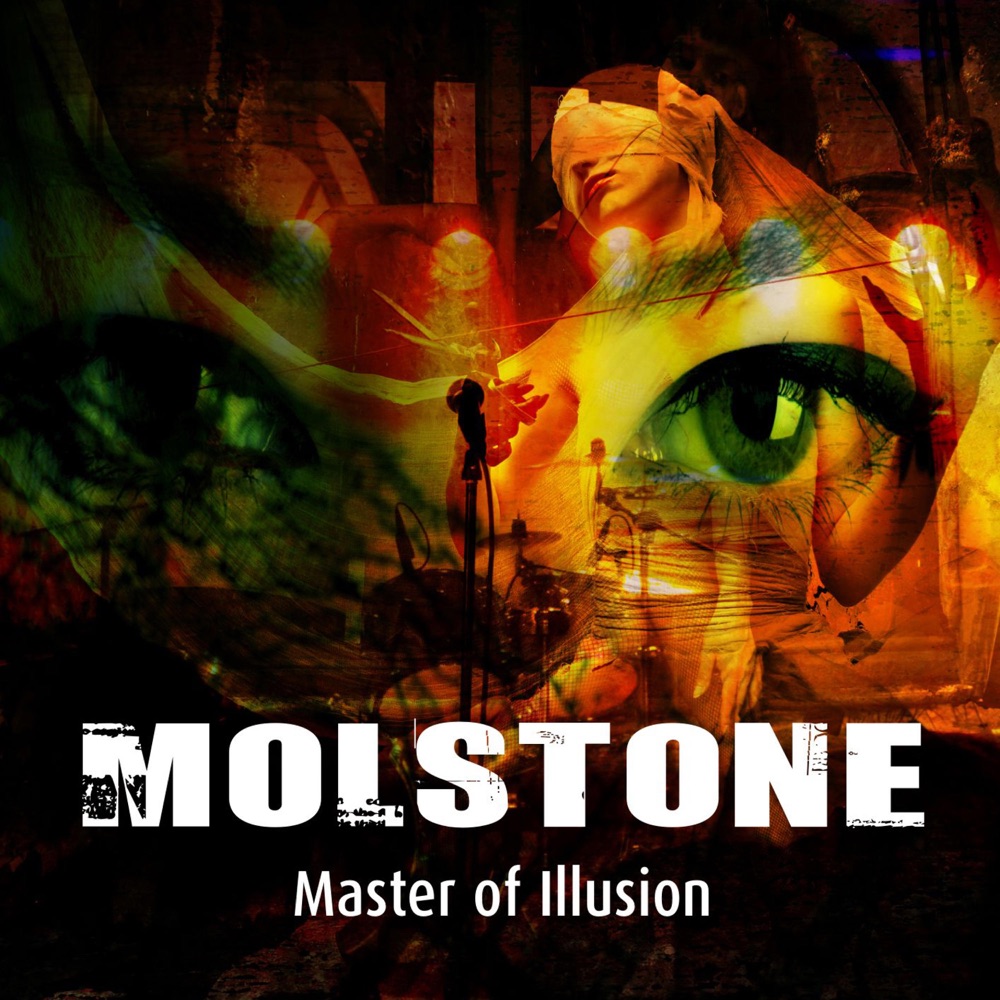
Self-released · 21 February 2026
Ten songs, sixty-five minutes and three tracks past the nine-minute mark: “Master Of Illusion” is Molstone’s first album, and it makes no attempt to hide where it comes from. The band formed in 2014 in Friesland, when bassist Mol Mulder asked Sieberein Schaaf (vocals and keyboards) and Klaas Hingst (drums) to put a group together; for the first few years they played Deep Purple, Pat Travers and Joe Bonamassa covers, and Bobby Veenstra came in later on guitars. Schaaf writes the material, and his CV accounts for half the record: he sang and played keyboards on Flamborough Head’s first two albums, “Unspoken Whisper” (1998) and “Defining The Legacy” (2001), and left the band shortly after the second for personal reasons. The fifth member, Jan Bulthuis, was brought in on keyboards precisely so Schaaf wouldn’t have to play everything while singing.
It isn’t a concept album, but the lyrics nearly all pull in one direction: “The Attic”, nine and a half minutes, is about what people hide when circumstances change; “Slave To Technology” about addiction; “Not Alone”, the shortest track at three and a half minutes, about standing up to domestic violence; “Mind Sculpture”, which closes the album at nine and a quarter, about manipulation. The musical centre of gravity is early Flamborough Head’s: banked keyboards, melodies you remember first time, solos traded between guitar and synth. What keeps it from being neo-prog by the book is the covers-band inheritance, because there’s real hard rock weight in the middle sections, and Sander Grupstra guests on twelve-string. “Heavy Weight”, five instrumental minutes of keyboards, is the band’s arrangement of a piece played at a funeral they took part in.
The record measures itself against late-nineties Dutch neo-prog (Flamborough Head, Kayak, with early Marillion and Pendragon somewhere behind) and against very little since, so a 2026 debut arrives sounding like catalogue. Then there’s the length: sixty-five minutes is a lot for an introduction, and with three nine-minute tracks and the rest at the same mid-tempo the second half asks for more patience than the material needs. What buys the album is craft. Schaaf’s voice holds up twenty-five years after he walked away from Flamborough Head, and the ten songs are arranged without a spare note. A man who left a band in 2001 for reasons he has never given took another twelve years to have one of his own, and filled it with songs about what people hide.
Rating: 7.0/10
Text by Guillem Cardós