
Jazz
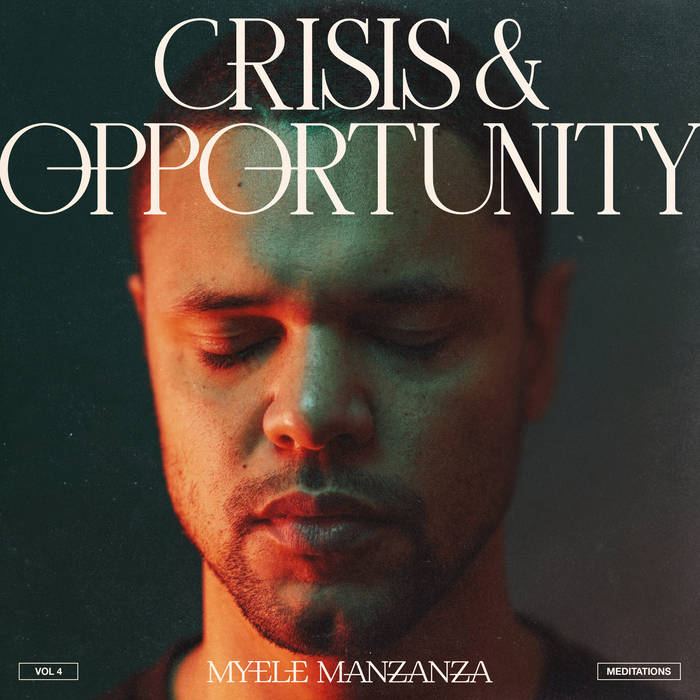
New Zealand drummer Myele Manzanza has just released what is his tenth record. And once again, since starting the “Crisis & Opportunity” series, he brings us his own particular take on a jazz lineage. Where the first volume gave us the sounds of the most classic modal jazz, in the style of Herbie Hancock or Miles Davis, the second volume dove fully into more jazz-fusion territory, with ideas close to jazz-rock, folk, experimental passages, and so on. The third volume, meanwhile, explored the winding paths of acid jazz and electronic jazz.
So: what does volume four have in store for us?
Well, we get a wonderful modern instrumental jazz album with a fully classic line-up. The record was recorded with Matthew Sheens on piano, Matt Penman on double bass and, naturally, Manzanza himself on drums. Obviously, even though it is released under the artist name Myele Manzanza, the compositions are credited to all three musicians.
The introductory presentation of “Crayford’s Room” consists of piano and chaotic drums, offering an unbeatable stage for Penman’s bowed double bass to stand out, until all three come together to develop the motif and close the introduction with fresh chaos. From there, a series of beautiful harmonies lead us into the deepest musical intimacy, where the artists prioritise subtlety over volume, before building in crescendo to a final explosion.
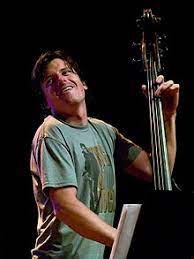
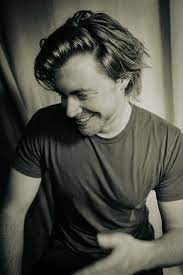
Sheens’s melancholic piano chords give way to a rhythmic acceleration and a more cheerful mood, contrasting with a darker, more percussive interlude. There’s room for double-bass solo expression, giving way in turn to a piano performance in a contemporary-music vein that gradually takes on a jazz-fusion flavour toward the end, with some moments dedicated to the drums. “Winter” is a tremendously academic track.
And when we come across a title as descriptive as “Something Old, Something New”, we honestly do not know what to write at first, since you would expect to find exactly that. And indeed, we get very classic ideas with strange rhythmic patterns and harmonic dissonances. Well, it is not exactly very “new”, but it is worth saying it has a very interesting intensity and originality, along with fabulous playing from every instrument.
The impression “Interlude” gives is of a repurposed fragment from some jam session that, with a clever post-production treatment, results in a fairly successful transitional track. It is followed by “Meditations”, where, over a rhythmic section with an almost tribal atmosphere, we get fairly impressionistic melodic piano turns, almost recalling the works of Claude Debussy. The shifts toward the double bass taking the spotlight change the composition’s focus, producing a stimulating sonic blend without clear anchor points for the listener, who has to let themselves be immersed in the music.
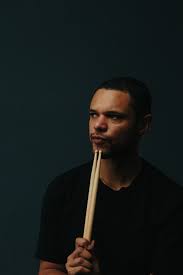
And “Homesick” gives us another lesson in class and musical language. At a slow tempo, with plenty of softness and delicacy, the main ideas unfold elegantly and, once again, in a kind of impressionist jazz, almost with the feel of modern chamber music and the typical whole-tone scales of musical impressionism, abandoning any attempt at romantic grandiloquence and highlighting each performer’s individual sensibility.
The title track, “Crisis & Opportunity”, opens in a much livelier fashion, perhaps serving as an epilogue to the series — who knows. Over the opening ostinato, calmer passages alternate, laying out individual ideas, with the other two players duly stepping into the background at each moment. Faced with this technical display of skill and elegance, all you can do is enjoy it to the fullest, especially at the point when the track plays a blistering game of dynamics that steers it toward a close full of energy.
It doesn’t matter whether you like jazz or not. Good art knows no genre. If you’re able to appreciate beauty, this is your moment to open yourself up to a fantastic record made for a sensitive audience, eager to take a delightful journey alongside this trio.
Writer: David Sàez