
After the previous two articles in which I talked about the Mellotron, it seems fitting to dedicate today’s article to its close cousin, the Birotron.
This instrument was barely used in practice and is in fact considered one of the rarest modern instruments — we’ll see why shortly — but it deserves a mention for Yes’s Rick Wakeman’s involvement in the project, since he was its biggest (in fact, almost its only) user.
The Birotron was developed starting in late 1974 by American Dave Biro, and it aimed to be a direct rival to the Mellotron, following the same concept of a tape-based rompler with analogue recordings of real instruments, but with some crucial differences that solved the Mellotron’s weak points.
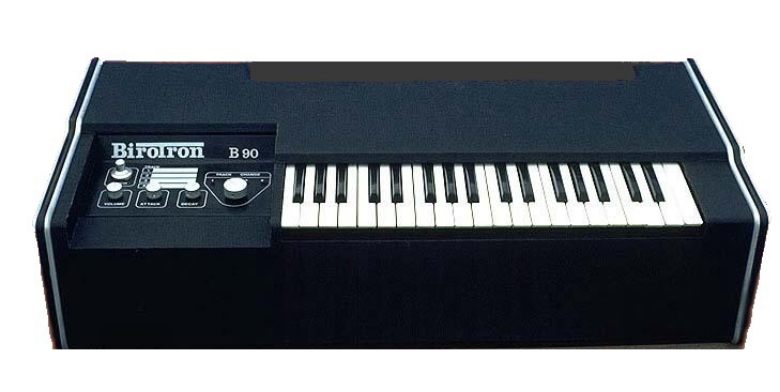
Birotron B 90 was to be its commercial name. This was the definitive version, practically ready to enter mass production.
The Mellotron used 3-track tape strips with a maximum sound duration of 8 seconds, which had to rewind to their starting point before being playable again, meaning it couldn’t handle fast note passages or sustained notes lasting more than 8 seconds. The Birotron, by contrast, used endless looped tapes, so the sound of a note could be sustained for as long as you liked, simply by holding the key down, and the action and note changes were instant, meaning you could play fast — according to Wakeman, “as fast as you want”. This meant the sounds it produced had no attack or decay of their own, but this was compensated for by controls that generated attack and decay electronically. What’s more, the looped-tape design made the instrument much more compact than a Mellotron M400, and it could be stacked on top of other keyboards. Beyond that, the aim was for it to be far more reliable than the notoriously problematic Mellotron.
As for the tape format, the Birotron made use of the standard 8-track cartridges popular especially in the USA (8-Track tape cartridges). It had 19 of these cartridges for the instrument’s 37 keys, meaning each 8-track tape held samples for 2 of the keys, giving the instrument 4 effective tracks (4 selectable sounds, compared to the Mellotron M400’s 3). As with the Mellotron M400, the tape cartridges could be swapped for a different set of instruments, always 4 per set.
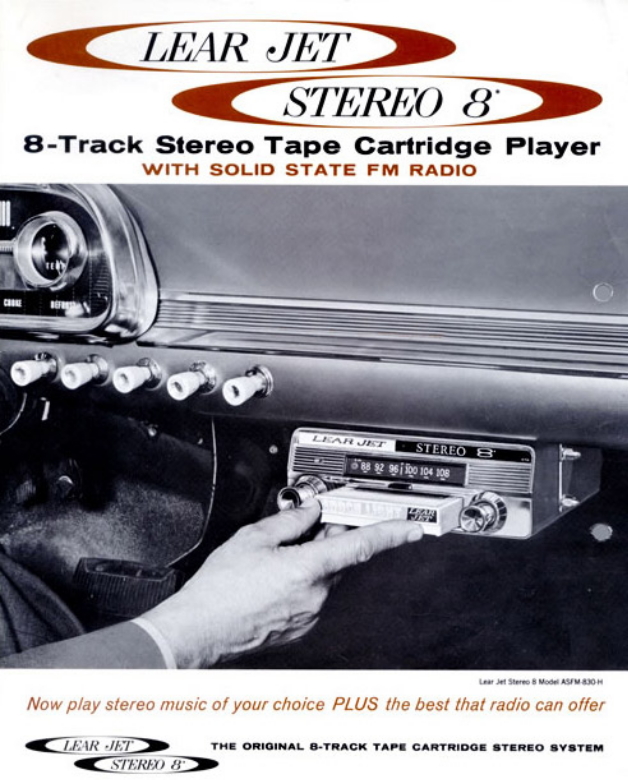
8-track tape cartridges and their players were popular in the late ’60s and throughout the ’70s, especially in the USA, while in Europe they never really caught on and cassette tapes became the standard.
Wakeman met Biro in 1975, and he liked the concept so much that he decided to co-finance the project, and when it was announced in 1976, advance orders came in from keyboardists as illustrious as Keith Emerson (famously no fan of the Mellotron, who welcomed the improvements the Birotron promised), John Paul Jones, Patrick Moraz and Elton John — and this despite the instrument being set to sell for far more than the Mellotron (£1,000, compared to around £500 for a Mellotron M400).
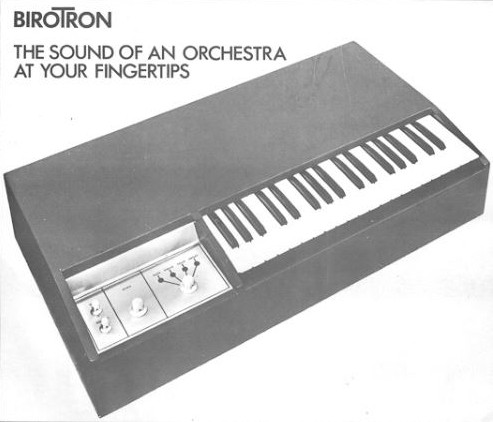
An early prototype from 1975
Prototypes were built — it’s said that only 17 complete prototype units were ever made in total, of which Wakeman owned 4. Unfortunately, the pre-production phase kept dragging on longer and longer as technical problems kept cropping up, and the company (called Birotronics) wanted to guarantee maximum reliability. On top of that, recording all the samples with real musicians was costing a great deal of money, and the finances were running dry. Wakeman had left Yes in 1974 and was busy with his own lavish solo projects, like “The Myths and Legends of King Arthur…”, and his tours during that period caused him significant financial losses.
Crucially, in those very same years electronic keyboards were evolving extremely fast — “string machines” appeared (string synthesizers, also major Mellotron rivals, but fully electronic), the RMI Keyboard Computer arrived, a revolutionary digital rompler, and genuine programmable synthesizers were starting to offer polyphony. All of this meant that, just as was happening to the Mellotron, the Birotron, with its mechanical magnetic-tape system, increasingly looked like an already obsolete piece of kit, and they eventually decided to scrap the project before true mass production could even begin. As Rick Wakeman himself put it, “the chip killed the Birotron”. Wakeman lost £50,000 on the project — a considerable sum of money at the time.
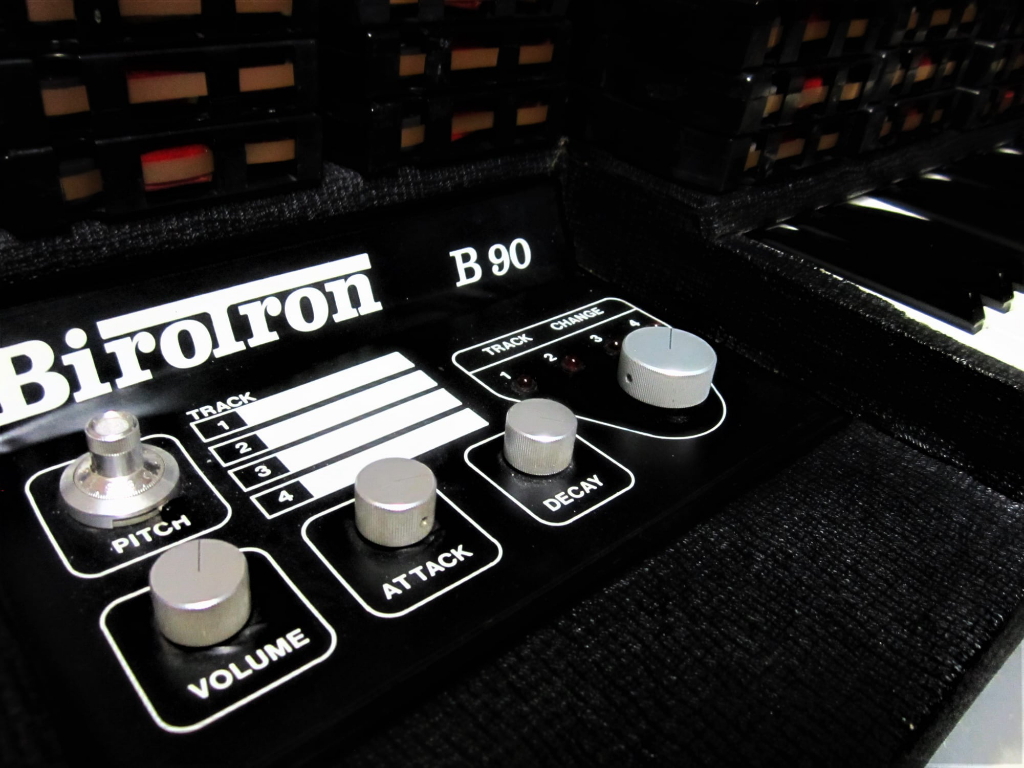
The Birotron B 90’s control panel. You can see the controls for attack and decay, as well as the pitch adjustment, the track-change selector and the volume potentiometer.
Wakeman rejoined Yes in November 1976 and used his Birotron prototypes on the “Going for the One” album tour (not on the studio record itself, where he still used Mellotrons), and later on the 1978 album “Tormato” and the tour that followed it (during which the live double album “Yesshows” was recorded), as well as on his solo record “Criminal Record”, until he decided to leave the band again in early 1980. As I mentioned earlier, Wakeman owned 4 prototype units at one point, but he hasn’t had any of them for many years now — 2 went missing and 2 suffered irreparable damage while on tour.
The Birotron, but above all the polyphonic synthesizer Polymoog, which we’ll cover in another article, were largely responsible for the notable shift in Wakeman’s sound with Yes on “Tormato”, compared to the band’s previous albums. Many fans criticised the keyboard sound on that album, feeling the timbres used were rather thin and bland — perhaps more modern, but lacking the body and character of the instruments used previously. But as I mentioned, this was mainly down to the use of the Polymoog rather than the Birotron.
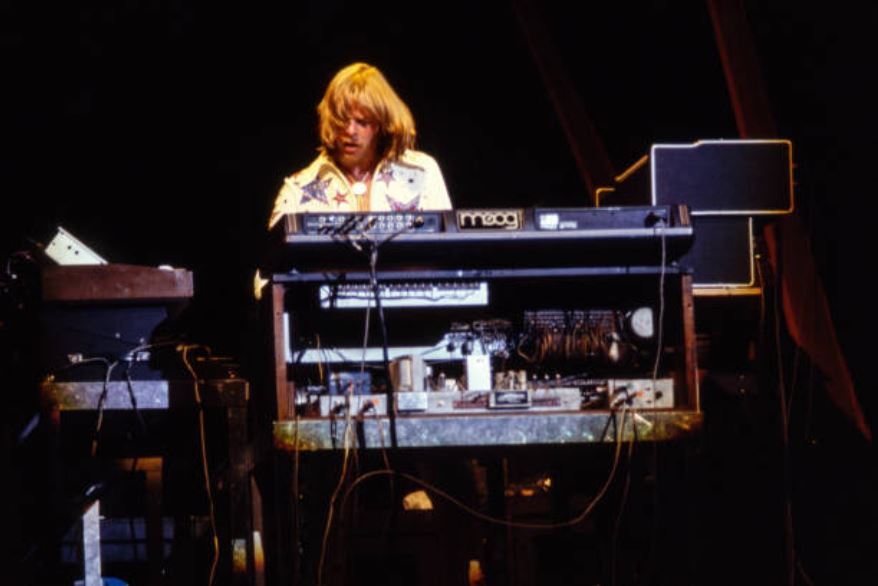
Wakeman with Yes in 1977. The two instruments stacked on the right of the photo are two Birotron B 90s, sitting on top of an RMI Keyboard Computer. In front of him is his Hammond C-3 organ with the Polymoog on top, and to his right you can see a Minimoog (he actually had two, another just out of shot) sitting on a barely visible Fender Rhodes electric piano.
Two other prototype units ended up with the Germans Tangerine Dream and Klaus Schulze. On Tangerine Dream’s album “Stratosfear”, the credits mention a “loop Mellotron” played by Chris Franke, and there’s some debate about what exactly this instrument was. Some suggest it was in fact already a Birotron prototype, but given that the album was recorded in August 1976, that seems a little too early for Tangerine Dream to already have a fully working Birotron. Tangerine Dream were notorious for modifying, and even building, their own electronic instruments, so others suggest it was actually a modified Mellotron adapted to run on looped tapes. The band’s members have never clarified this point.
Today only 4 units are known to still exist, only 2 of them fully complete, and all of them have tapes in very poor condition, which is why the Birotron has ended up as arguably the rarest modern instrument out there. That said, a handful of enthusiasts have spent recent years digitising whatever samples could still be recovered (some, they say, were actually noticeably better than their Mellotron equivalents, while others were worse), in order to preserve the legacy of this rare but historically significant instrument. In fact, some digital Mellotron sample collections currently on the market, including some sold by Streetly itself, also include Birotron samples.
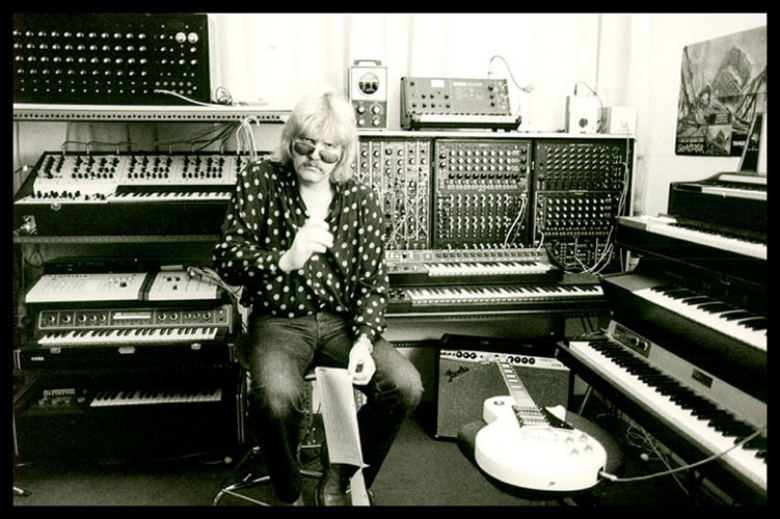
Edgar Froese of Tangerine Dream in his home studio in 1979. Right at the bottom left you can see the Birotron B 90. Can you identify all the other instruments in the photo? You’ll find the answer in the book!
Until next time!
Gerard Bassols
If you enjoy this topic, remember you’ll find much more information in the book “Los Instrumentos Musicales del Rock Progresivo; Guía Ilustrada”, available at this link. And if you’re thinking about Christmas presents, well, now you know!
https://www.amazon.es/instrumentos-musicales-Rock-Progresivo-ilustrada/dp/8413318645
And if you’d prefer, it’s also published in English:
https://www.amazon.com/Musical-Instruments-Progressive-Rock/dp/8413385997