
Progressive Rock
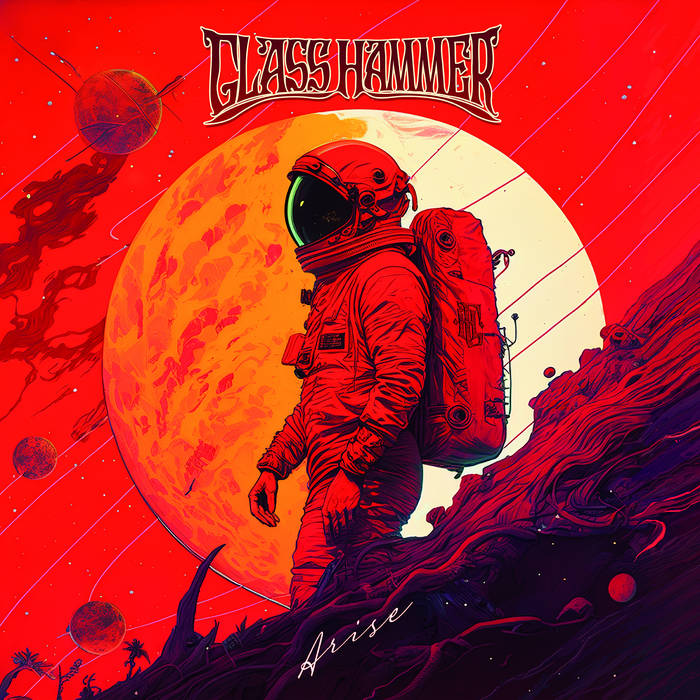
The tandem Steve Babb and Fred Schendel had formed since 1992 has changed. This time around, in Glass Hammer, Steve Babb has taken charge of keyboards, guitars, bass, percussion and vocals; Hannah Pryor is the lead vocalist for a fourth consecutive album. New additions are Reese Boyd on guitars and Randall Williams on drums. And as a guest artist we have Fred Schendel himself on guitars and drums on the track “Rift at Wasp-12” — genuinely odd.
The album’s introduction is titled “Launch of the Daedalus”. An appealing track you could easily find on any film score, and if the intention was to set the scene for a space launch, then mission accomplished.
In march form, in 2/4 time, “Wolf 359” opens with a strange drum production where the cymbals, especially the hi-hat, sound off-balance, and the guitars show a very particular dissonance. Knowing this band’s other work, we realise it is entirely intentional, and we understand they wanted to find a more spacey sound.
And as our ears get used to the sonic quirks, we start to appreciate the epic scope the composition is built on, with interesting melodic lines. There is no flood of ideas and concepts here, just the right amount, well used in service of the music and the story they are telling.
On “Airon (18 Delphini b)”, Steve Babb’s voice, treated to sound like a robot, trades lines with Hannah Pryor, making for a fairly standard rock song with somewhat corny keyboards, though a fabulous bass that stands out on a careful listen. It is followed by an instrumental electronic track, calm and ambient, titled “Mare Sirenum”. Two well-built, solid tracks that try to draw us into space.
As is the drum production on “Lost”, which we could almost call lo-fi. It certainly comes off as original once the voice and its backing come in, though it does not quite win me over. Nor does the composition itself, since it is entirely lacking in character and energy. The alternation between sung sections and the guitar melody is the track’s defining feature, and honestly, there is not much substance to it.
The nicest thing about the album so far is honestly the bass lines, which have the consistency the rest of the instrumentation is missing. A good example is “Rift at Wasp-12”, even though the onomatopoeic chorus is quite catchy and easy to remember. The interlude, very much in the style of seventies hard rock with a touch of psychedelia — subtle, mind you — is also worth noting.


And continuing along this hard-rock line, a touch darker and with lovely mellotron-toned keyboards in the background, we find “Proxima Centauri b” (first exit on the right leaving the Matadepera roundabout). Here the middle-section keyboards really do lend it a spacey feel, while the guitar offers a delicate solo that contrasts with the good kind of rawness and grit from the bass.
So we arrive at “Arise”, where the vocal melody’s notes unfold over an insistent bass riff. The first interlude breaks from that recurrence to reach more ethereal territory, before returning to the main ideas. Afterwards, the keyboard and guitar solos lay bare all the production choices we have discussed, which we should call bold and daring; whether you like them afterward is a very personal matter. From there we get a kind of verse section that carries us to the end without excessive significance.
The album closes with its longest track: “The Return of Daedalus”, the final chapter of this story. It features an extended instrumental development, with a feel similar to what Pink Floyd used to conjure, and curiously the production here leans into that, transporting you back to that era — even though the idea was to take you into space. The conductor once again is the bass, which has become the star of the record. Around its riffs, it amalgamates the rest of the musicians, authoritatively steering them through this well-crafted kind of jam, which gradually builds toward the closing dynamics of a classicist progressive-rock style.
It is genuinely a peculiar proposal that will appeal to fans of lo-fi and rather vintage space rock. It is also interesting if you play bass yourself, since the work done on that instrument is very enjoyable.
Writer: David Sàez